1
Maintenance of Cannabis germplasm in the Vavilov Research Institute Gene Bank - 1993
Nikolai Lemeshev1, Lyudmila Rumyantseva1 and Robert C. Clarke2
1. N.I. Vavilov Institute of Plant Industry, 42 Bolshaya
Morskaya Street, St. Petersburg 190000, Russia
2. International Hemp Association, Postbus 75007, 1070 AA Amsterdam, The Netherlands
Lemeshev, N., L.
Rumyantseva and R. C. Clarke. Maintenance of Cannabis germplasm in the Vavilov
Research Institute Gene Bank- 1993. Journal of the International Hemp
Association 1: 1; 3-5.
The collection of Cannabis hemp
germplasm at the Vavilov Research Institute (VIR) consists of 397 accessions from 3
different eco-geographical groups: Northern, Central and Southern. Eighty-five
collection accessions were sown in isolation at 4 locations in Russia in 1993 for the
purpose of maintaining the gene pools and replenishing the reserves of seed for
distribution. Sixty accessions yielded from 10 to 2,000 grams of seed each.
The remaining 25 accessions yielded no seeds.
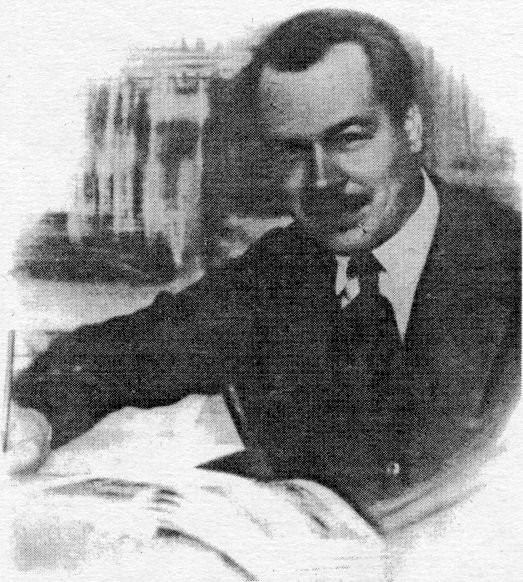
Figure 1. N. I. Vavilov, courtesy VIR.
Introduction
The most important
project of the International Hemp Association is a grant of humanitarian aid to the N. I.
Vavilov Institute of Plant Industry (VIR) in St. Petersburg, Russia. The VIR was
founded in 1924 by plant collector and geneticist N.I. Vavilov (Fig. 1), one of the first
scientists to recognize the importance of plant genetic resources conservation. The
institute is the longest existing seedbank in the world and houses a priceless collection
of over 400,000 seed accessions.
The Department of Industrial Crops of the VIR
maintains the largest Cannabis germplasm collection in the world. Most of
these accessions are either wild landraces or fiber hemp varieties, and many of them are
found in no other gene banks. Under normal storage conditions, hemp seeds can be
kept for about 5 years before losing viability. Maintaining a Cannabis
collection therefore involves reproducing the accessions at least once every 5
years. Since the dissolution of the Soviet Union, the funding of the VIR has
dramatically decreased, threatening the maintenance of its collections. If the Cannabis
accessions of the VIR are not reproduced they will surely become extinct before their true
value is ever realized and utilized. Especially in light of the renewed interest in Cannabis,
it would be very short-sighted to let this collection die.
| Table 1. Summary of Cannabis seed accessions in the VIR gene bank March, 1993. | ||
| Country of origin | No. of accessions |
No. sown in 1993 |
| Afghanistan Bulgaria China Czechoslovakia France Germany Hungary Italy Poland Portugal Rumania U.S.S.R. Spain Syria Turkey Yugoslavia unknown |
2 8 41 3 8 72 27 8 6 1 7 172 2 1 4 34 1 |
1 14 2 4 3 4 4 1 46 1 1 4 |
| Totals | 397 | 85 |
| Bold Face entries indicate the most threatened accessions of each general grouping based on both the amount of seed accessioned and the date of production of the seed. The VIR attempted to multiply these accessions during 1993. | ||
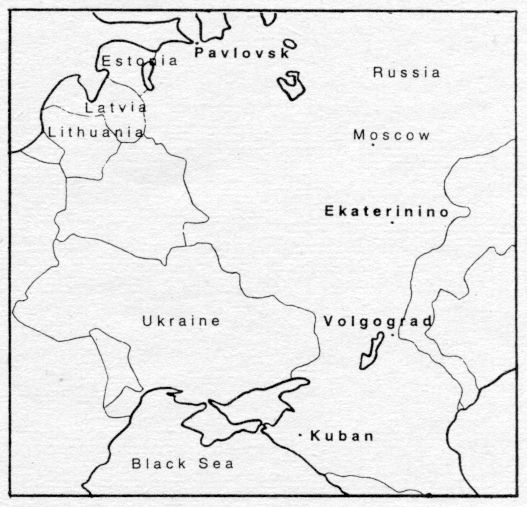
Figure 2. Locations of four VIR Experimental Stations.
In 1993 the VIR, with the
sole support of the IHA, began a 4 year program to preserve and evaluate its Cannabis
germplasm. The collection consists of 397 accessions of Cannabis seeds from
three basic eco-geographical groups: Northern, Middle, and Southern, collected from 16
nations (Table 1). The collection represents wild and traditional cultivated
varieties as well as products of plant improvement programs. The vast majority of
the accessions are classified as low-THC chemotypes of Cannabis sativa L. All
of the accessions will be reproduced during the first three years, and in 1996 the entire
collection will be grown in replicate gardens and each accession will be characterized.
Two key requirements must be fulfilled before
an accession can be considered adequately reproduced. The primary goal of a
germplasm preservation project is the conservation of the entire gene pool. It is
very important that the population size is large enough to ensure that nearly all of the
genes within the gene pool are reproduced in the resultant seed. We have set a
minimum limit of 1,000 plants in each population. This should ensure 99%
preservation of the gene pool. The second goal is to reproduce the accession in
sufficient amounts to distribute seed to researchers worldwide. We have set a
minimum limit of 200 grams of seed for storage and later reproductions. Two hundred
grams is approximately 10,000 seeds and will allow 5,000 seeds to be stored in an active
collection for reproduction and 5,000 seeds to be kept in long-term storage. Seeds
can only be released to the research community if more than 200 grams of seed from each
accession are held by the VIR.
This paper reports the results obtained in
1993.
Materials and methods
Eighty-five
accessions of hemp contained in the germplasm collection of the Department of Industrial
Crops at the VIR were sown with the purpose of germplasm maintenance, replenishment of
seed stocks for distribution, and installation in long-term storage. The accessions
were planted at 4 VIR Experiment Stations in Russia (Fig. 2): Pavlovsk (59°N) near St.
Petersburg, Ekaterinino (53°N) in Tambov Province, Kuban (44°N) near Krasnodar, and
Volgograd (48°N).
At the Pavlovsk Experiment Station 15
collection accessions belonging to the Northern and Central groups were sown in isolated
plots. Each plot contained one hemp accession, the distance between the plots being
3-4 kilometers. The accessions were sown according to their ripening period, with
early-ripening varieties planted nearer to late-ripening varieties to avoid stray
pollination.
Agrometeorological conditions during 1993 were
unfavorable for the growth and development of hemp. The spring was late and
cold. Air and soil temperatures in May and early June were lower than average by 4-5
°C. Because of this the spring sowing was delayed by 15 days compared to the
average sowing date. The plots were planted on June 10-13. The seed was sown
in densely planted rows spaced 20 cm apart. The size of the plot varied from 8-12 m2
depending on the number of seeds available.
The absence of rainfall in late May and strong
winds dried out the soil. The first seedlings appeared 10-12 days after sowing and
continued to appear for several days. During the course of the whole vegetative
period the air temperature was well below average, while the rainfall was above
average. Therefore, the development of the plants was delayed.
Sowing of the seed and maintenance of the
plants in the isolation plots were performed according to the methods developed by the
Department of Industrial Crops. Maintenance of the plots consisted of hoeing the
soil when needed, thinning the rows where seedling density was too high, weeding, applying
fertilizer, removing male plants after they finished flowering, covering the female plants
with gauze nets at the time of ripening to protect the seeds from birds, and harvesting of
the seed plants.
The remaining 70 collection accessions of the
Central and Southern eco-geographical groups were sown at the Ekaterinino, Kuban and
Volgograd Experiment Stations. At the former two stations accessions were sown in
isolated plots. At the Volgograd Station isolation was achieved by using wooden and
gauze isolation chambers. In 1993 the agrometeorological conditions there were as
described for the Pavlovsk Station, especially the dry and cold spring. This caused
a delay in sowing, sporadic germination of the seeds, and poor condition of the
seedlings. During the course of the vegetative period the rainfall was 2-3 times the
average for many years. This also impeded the development of the plants.
Results
At the Pavlovsk
Experiment Station, complete flowering was observed in early August. Seed formation
occurred in late August and early September. Frosts arrived in the end of September and
the temperature fell to minus 5 °C. These frosts killed the plants that had not matured
and been harvested. Thus out of the 15 collection accessions planted at the Pavlovsk
Station, 10 accessions yielded from 10-1,000 grams of mature seed, two accessions did not
ripen, two accessions were stolen, and one yielded only immature seeds (Table 2).
| Table 2. Results of 1993 VIR/IHA Cannabis germplasm reproduction at the Pavlovsk Experiment Station. | ||||
| Catalog No. |
Name and/or origin |
Total Plants |
Plant Height (cm) |
Seed Yield (g) |
| 313 314 315 316 318 61 347 361 70 78 155 413 414 422 144 |
Kirov Region Kirov Region Kirov Region Kirov Region Komi Republic Mordovskaya Mariyskaya Udmurtskaya Gorkovskaya Toguchinskaya Toguchinskaya Kazakhstan Kazakhstan Kazakhstan Altaiskaya |
4,000 500 300 600 140 300 320 400 1,000 1,300 5 2,100 800 700 1,200 |
115 112 135 110 95 115 140 135 170 155 160 175 160 170 150 |
1,000 200 300 300 150 200 300 250 ** 40* 10 900 *** *** ** |
| Totals | 15 accessions | 13,665 | 3,650 | |
| *: Immature seeds; **: Seeds did not ripen, ***: Inflorescences were stolen. Bold Face: Successful reproductions of more than 200 g of seed from more than 1,000 plants. | ||||
Twenty accessions were planted at the Ekaterinino Station; 14 of the accessions yielded from 10-1,200 grams of seed and 6 accessions failed to germinate because they were from old reproductions (Table 3). Twenty accessions were planted at the Kuban Station; 17 accessions yielded from 10-2,160 grams of seed and three accessions were stolen, (Table 4). Thirty accessions were planted at the Volgograd Station and 19 accessions yielded from 5-790 grams of seed, three accessions failed to germinate, and 8 accessions were stolen (Table 5).
| Table 3.
Results of 1993 VIR/IHA Cannabis germplasm reproduction at the Ekaterinino Experiment Station. |
||||
| Catalog No. |
Name and/or origin |
Total Plants |
Plant Height (cm) |
Seed Yield (g) |
| 89 141 60 65 ? 120 127 132 536 539 528 493 497 498 445 557 477 511 363 311 507 |
Altaiskaya Altaiskaya Dalnevostoch. Sumskaya Transcarp. Reg. Transcarp. Reg. Transcarp. Reg. Saratovskaya Fibrimon 24 Tyumenskaya Yellow stem 10 Yuzhnaya Soz. 22 Hybrid Krasn. 10 Unisexual Zolotonoshsk. 13 Local Afghan. Dneprovskaya 5 Shumperskai Yuzhnaya Cherk. Hybrid Glukh. |
180 none none 580 1,250 570 1,000 500 900 1,300 1,000 250 800 ***** 550 150 none none none none |
175 180 147 150 145 180 180 210 195 230 240 200 230 165 |
1,175 **** **** 80 1,000 1,045 990 350 225 670 530 950 1,200 10 295 170 **** **** **** **** |
| Totals | 20 accessions | 9.030 | 8,690 | |
| ****: Seeds did not germinate, *****: poor germination. Bold Face: see table 2. | ||||
| Table 4. Results of 1993 VIR/IHA Cannabis germplasm reproduction at the Kuban Experiment Station. | ||||
| Catalog No. |
Name and/or origin |
Total Plants |
Plant Height (cm) |
Seed Yield (g) |
| 538 534 532 527 524 517 509 513 535 533 494 464 375 280 337 338 184 499 123 397 |
Felina 34, France Ukraine Fibr. 19, France Irkutskaya Daghestan Rep. Hybrid Dnepr.1 Krasnod. 78 Irkutskaya Local, Hungary Fedr. 74, France Yuzhnaya Soz. 8 Local Turkey Novosadska, Yug. Distr. di Fatza, It. Sai-ma, China Cu-ma, China Tin-yan, China Yuz. Odn. Soz. 14 Transcarp. Reg. Local, Syria |
98 110 42 20 160 60 10 70 20 14 36 36 18 24 176 48 60 76 900 22 |
160 165 270 220 235 165 280 310 172 173 160 280 180 195 312 165 173 |
170 1,200 200 600 2,160 620 1,260 785 250 90 10 500 550 100 300 *** *** *** 710 440 |
| Totals | 20 accessions | 2,000 | 9,945 | |
| ***, Bold Face: see table 2. | ||||
| Table 5. Results of 1993 VIR/IHA Cannabis germplasm reproduction. Volgograd Experiment Station. | ||||
| Catalog No. |
Name and/or origin |
Total Plants |
Plant Height (cm) |
Seed Yield (g) |
| 19 23 36 44 34 138 85 149 162 173 177 220 221 225 181 187 185 186 300 305 306 324 383 385 278 279 204 210 282 345 |
Nisca, Yugo. Local, Yugo. Local, Czechoslov. Yuzhnaya Soz. 1 Yuzhnaya Soz. 84 Linia, Hungary Tyumenskaya Krasnodarskaya Mozdokskaya Kompolti F Lai-sui, China Odn. Bernburg. Odn. Bernburg. Odn. Bernburg. Sar-san, China Sui-yan, China Shan-var, China Chui-sui-da, China Local, China Local, China Fi-cin, China U-chan-da, China Local, China Local, China Napoletana, Italy Bolognese Local, Ukraine Y.C.A.R. 42/118 Karmanola Daghestan |
740 1,000 54 65 1,000 none 213 9 25 52 600 700 1,000 1,000 210 700 800 600 600 240 300 350 700 700 20 none 500 500 1,000 none |
175 180 165 135 150 130 120 160 175 200 150 152 149 195 180 210 200 180 205 195 200 160 185 210 170 200 |
380 200 260 450 700 **** *** *** 360 320 *** *** 450 *** *** 35 *** 200 260 280 160 220 200 180 10 **** 900 *** 430 **** |
| Totals | 30 accessions | 13,678 | 5,995 | |
| Grand Totals |
85 accessions | 38,373 | 28,280 | |
| ***, ****, Bold Face: see tables 2 and 3. | ||||