Your guide to making money in the multi-billion dollar marijuana industry
| Own your ow legal marijuana business | Your guide to making money in the multi-billion dollar marijuana industry |
| Major Studies of Drugs and Drug Policy | ||||
| Drug Use In America: Problem in Perspective - US National Commission on Marihuana and Drug Abuse |
|
|
The Report of the National Commission on Marihuana and Drug AbuseDrug Use In America: Problem in PerspectiveCommissioned by President Richard M. Nixon, March, 1972 Chapter Three - The Social Impact of Drug Dependence and Drug-Induced Behavior
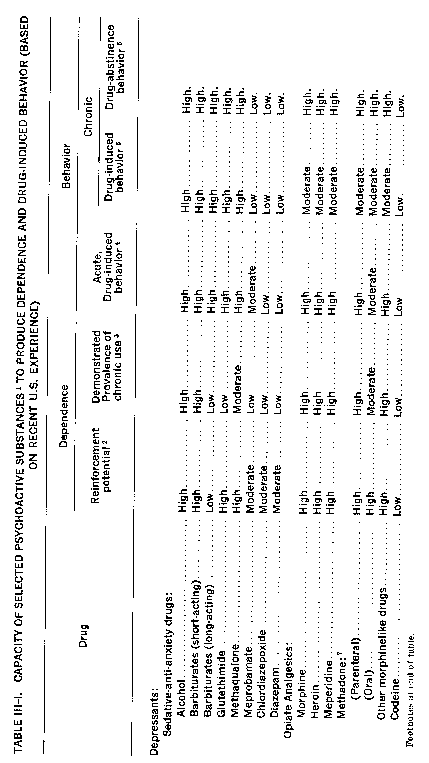
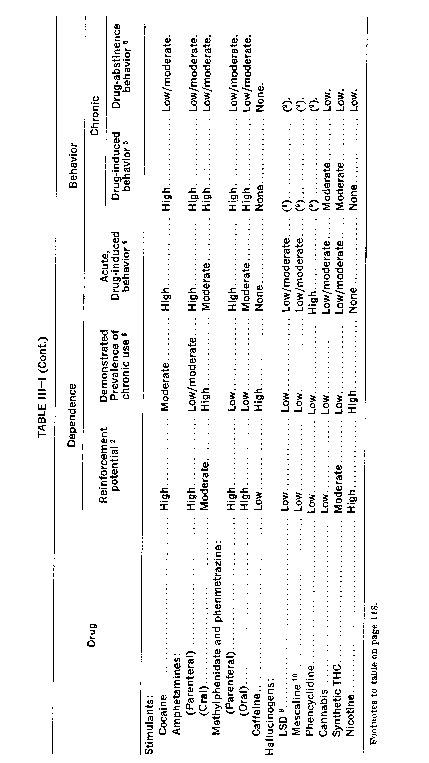
Western man pays frequent homage to the freedom of his will. Although Western philosophy has always included strains of predestination in one form or another, the belief that man controls his fate runs deep, and even those who question this from. the scientific standpoint are often quick to add that the state should continue to act upon it. Whenever an individual chooses to act irresponsibly, as defined by his society, he is held accountable to other men, to his state, or according to prevailing belief, to his Creator. But man does not will everything that happens to him, and the precepts of free will and accountability have been tempered in relation to many conditions of existence, Foremost of these, of course, is the notion of sickness. Although the individual may place himself in a position which increases the risk of disease, he does not usually will to be sick; -accordingly, he is generally not held accountable either for his sickness or for its behavioral concomitants. Poverty is another area which has recently been separated from notions of free will and moral worth. There are some who shun worldly possessions in order to enhance their spirituality, but most men do not will to be poor. Since the late 19th Century Western society has acted increasingly on the proposition that environmental factors may predispose poverty and socioeconomic immobility. The emergence of the welfare state rests on the belief that man should not be held accountable for, or suffer for that which he cannot prevent. Disease and poverty are two broad qualifications of a normative order premised on considerations of free will. In addition, our normative system and our law are replete with other exceptions which recognize that an individual may well be overborne by others or by conditions for which he is not responsible. Love, hypnosis, duress, "acts of God," irresistible impulses, uncontrollable rages all may excuse the individual for conduct which might otherwise be considered foolish, unwise, intemperate or even criminal. Of course, there are also conditions which may predispose behavior although we do not excuse them, such as foolishness, immoderation and vanity. Drugs introduce a new dimension into this uneasy marriage of free will and human and social imperfection. The very phrase "being under the influence" of a drug manifests the fundamental proposition that drugs can alter or control human behavior. The drug may induce a socially desirable form of control in the sense that the influence of a drug may restore control which has otherwise been lost. For example, sedative drugs may be administered to a person whose anguish over the death of a loved one is out of control, not to obliterate grief but to modify the person's responses. Drugs may also be used to minimize the effects of "unwilled" behaviors stemming from mental illness or aberration. Some examples of the socially sanctioned uses of drugs for behavior control in the context of therapy are: the administration of drugs to mental patients to dampen the intensity of acute behavioral disruption and to enhance their capacity for organized responses, the drug-based efforts to increase concentration and reduce aimlessness of hyperkenetic children, and the maintenance of heroin-dependent persons on methadone to stabilize their otherwise anti-social behavior. Drugs have also been used for punishment; that is to alter the behavior of persons in detention, although this development, has met with substantial resistance. The common thread of these examples is that drugs may be employed to restore the capacity for responsible, willed behavior. However, public attitude and social policy toward drug use are focused primarily on the fact that drugs may also diminish the capacity of a person to control his conduct in the manner society expects of him. This perception has dominated political rhetoric, literary description, legal doctrine and public understanding about drugs for centuries. With some exceptions, the American normative system stipulates that such loss of control is socially undesirable and in itself constitutes irresponsible behavior. On the other hand, American law has long been ambivalent about whether a person should be held entirely or partially accountable for such behavior or its consequences, reflecting the basic tension between freedom of will and human limitations. Whatever the precise relationship between drug use and self -control, the very possibility of drug-influenced behavior is what distinguishes drug use from other forms of behavior, motivating all societies to regulate it. In American society, however, the extent to which drug use, by itself, can deprive the individual of control over his behavior has been highly exaggerated. Drugs are fixed in the collective consciousness as substances which can rob man of his sentiency, morals and values. Each drug, whether it be LSD, heroin or marihuana, is widely believed to have the capacity to destroy the will. For decades, the public has held the view that the initial use of psychoactive substances, often tied to the exotic Eastern world, is the opening of Pandora's box: one taste of the forbidden fruit and control will shortly be lost. The assumed paths from marihuana to heroin, from. LSD to insanity, from heroin to crime, and, in bygone days, from tobacco to alcohol, and from alcohol to skid row, reflect concern not only about social cost but also about the inevitable erosion of will. This presumed relationship between drugs and will is also reflected in the tendencies to ascribe a causal relationship to drugs and almost every type of unwanted behavior, and to attribute to drugs the undes1rable behavior of disapproved social groups. Whenever specific drugs are temporally related to sexual excess, crime, traffic accidents or use of other drugs, the person and his will tend to be forgotten, and the drug itself becomes the villain. Perhaps the unique expression of drug-induced loss of self-control is the inability of the individual to stop using the drug. The dread of becoming ensnared in the "clutches of addiction" has long dominated public antipathy toward the evils of drug use, reflecting a deep-seated belief that mental, physical and moral debilitation is the likely consequence of habitual drug use. Whatever its ancillary impact or subsequent history, the Harrison Narcotic Act of 1914 embodied above all else a firm public policy judgment opposing the use of "addicting" or "habit-forming drugs." Further, the progression thesis, which has been propounded since drug policy began, although the drugs have changed, and the more recent distinction between bard and soft drugs, suggests how strongly concern about dependence dominates the entire drug issue. The notion of addiction is of relatively recent origin, emerging as a recognizable medical entity during the 18th Century. Before that time, the focus of social control in this country as in other societies, was on the disordering consequences of the drug experience. Aggressive behavior, loss of psychomotor control or other disordered behavior induced by the drug experience must also be taken into account in the formulation of drug policy. TABLE 111-1. (Cont.)
FOOTNOTES to TABLE 111-1. I In choosing substances to be included in this table, the Commission did not attempt to be comprehensive. Selections were made in order to illustrate the full range of dependence liability and capacity for influencing or inducing behavioral change. 2 Capacity of drug to induce continued use on the basis of psychological reward. Relative judgments are based on use of maximum tolerated dose, as measured by laboratory studies and confirmed by refined clinical experience. 3 The actual prevalence of chronic use among the using population. The relative prevalence of chronic use of specific substances is determined by a wide range of sociocultural variables, including such factors as social custom, availability of the substance, susceptibility of particular populations to patterns of chronic use and availability of more potent substances. 4 Potential for disruption or impairment of social functioning after a single dose. Relative judgments are based on consumption of doses sufficient to produce marked pharmacological effects. 5 Drug-induced behavioral response, as measured by potential impairment of social functioning, accompanying chronic administration of dependence-producing doses. 6 Short-term behavioral responses, measured by disruption or impairment of social functioning, accompanying interruption of drug taking after chronic administration of dependence producing doses. 7 The relative judgments regarding methadone are based on parenteral administration and oral administration in naive subjects. The Commission expressly notes that oral administration to opiate-dependent persons in a maintenance setting has a significantly different impact on behavior. 8 Includes related drugs such as psilocybin, DMT. 9 Inapplicable. Because of extremely low reinforcement potential, chronic use patterns do not generally occur, and no abstinence syndrome has been described. 10 Includes drugs which are structurally related and roughly similar in effect to mescaline, such as DOM ("STP"). While drugs have a capacity to affect behavior, they do not do so uniformly. Table 111-1 provides an overview of the relative capacity of selected drugs to induce dependence and influence behavior. However, drugs do not affect behavior independently. Non-drug factors play an equally crucial role in determining the behavorial concomitants of drug use. The personal characteristics of the user, his expectations about the drug experience and about society's attitudes and possible responses, the setting in which the drug is used, as well as broader sociocultural factors, are all major determinants of drug effect and of the individual's capacity to control the effects of the drug through the exercise of his will. We will now examine the social consequences of drug-using behavior. First, we will establish a framework by analyzing drug dependence and drug-induced behavior from a psychopharmacological standpoint, providing detailed explanations for the concepts presented in Table 111-1. Then we will consider the actual and potential impact on the public safety and the public health and welfare of the patterns of drug-using behavior discussed in the previous Chapter. Finally, we will sketch the implications of this analysis for social policy. These guidelines will serve as a backdrop for the application of the policy-making process in Chapter Four. I -- DRUG DEPENDENCESince the psychoactive properties of naturally-occurring substances were first discovered and sought, the excessive, chronic or compulsive use of these substances has been an identifiable and predictable human condition. Until the 19th Century, however, this phenomenon was viewed primarily in moral, rather than medical or scientific terms. One 18th Century observer likened the use of opium in Eastern countries to the use of "wine and spiritous liquors in civilized Europe (where it is) the support of the coward, the solace of the wretched and the daily source of intoxication of the debauchee" (Crumpe 1793). This is not to say that the physical consequences of chronic drug use went unnoticed. As early as 1701, a London physician, in The Mysteries of Opium Revealed, addressed "The Effects of Sudden Leaving Off the Use of Opium After a Long and Lavish Use Thereof," where he described a withdrawal syndrome (Jones 1701). However, neither Dr. Jones nor his contemporaries regarded this condition as fundamentally different from that associated with excessive wine drinking or the excessive eating or chewing of other substances such as tobacco. The, physical concomitants of the "opium habit", like those for tobacco and wine, were associated by some with a defect of individual will and by others with some unknown property of the drugs. Isolation of morphine from opium and the subsequent development of the hypodermic syringe clarified the distinction between the opium habit and the alcohol and tobacco habits. Two previously held theories were now discarded: first, that the opium habit was dependent on oral ingestion of the drug, and second, that the withdrawal effects arose. from resinous substances in the opium. Vivid literary descriptions, the, introduction of opium-smoking by Chinese immigrants, and the widespread use of opium and morphine during and after the Civil War soon stimulated the attention of medical professionals. The "army disease" or morphinisin was now recognized as a distinctive medical and social problem. During the last three decades of the 19th Century, medical professionals strove to understand, describe and treat this sickness. Meanwhile, the public was becoming acquainted with the habit-forming properties of the opiates, as the population of opiate-dependent persons increased. State laws at once, began to reflect them popular fear of drug habits, as did the labelling requirement of the Pure Food and Drug Act of 1906. Simultaneously, the social aspects of chronic opiate use aroused the popular imagination. The stereotype of the "dope fiend" emerged, and with it a highly restrictive public policy, one rooted in considerations apart from the pharmacologic effects of the prohibited drugs. TEMINOLOGICAL CONFUSION In the United States, the public, the medical professions and policy makers all discovered the individual mid social consequences of chronic opium use at roughly the same time. A connection between popular vocabulary and scientific terminology was established as the scientific community tended to appropriate lay terms, laden with emotional and imprecise meanings, and to imbue them with scientific meanings. The first of these descriptive terms to emerge was "addictions" Addiction The word addiction evolved from the Latin addicere which, in Roman law, meant the giving or binding over of a person to one thing or another, such as a judge assigning a debtor to his creditor. By the late 16th Century, "to addict" had apparently assumed a broader meaning: to devote, give up or apply habitually to a practice. One writer suggests that the word was generally identified with bad habits or vices (Sonnedecker 1959). With the emergence of public and scientific interest in the opium problem, "addiction"' and "mania" were commonly used in the press to describe this ascendent vice. Within the American scientific community, the terms most commonly employed during the 19th and early 20th Centuries to describe the condition were "opium (or morphine) habit" and "morphinism."' In 1903, for example, the, American Pharmaceutical Association established a "Committee of the Acquirement of Drug Habits." By 1920, however, the scientific community had given the term addiction its blessing, a development paralleling the popularization of the word "narcotics" and the entry of government into the field. "Narcotic addiction" became a household phrase. As we suggested in Chapter One, "narcotic" soon lost its pharmacologic meaning and came to encompass any drug associated with the populations using the opiates or cocaine; similarly "addiction" came to be tied in the public mind to the habitual use of any drug. In the press and councils of government, marihuana users and cocaine users were frequently characterized as addicts. Interestingly, the dangers of alcohol "addiction" were widely proclaimed during the intense Public discussion surrounding the adoption of the 18th Amendment although this terminology was strongly resisted by opponents of Prohibition. Many scientists remained uncomfortable with the imprecise use of the term addiction, and particularly with its strong moral over-tones. Yet, because the condition was so little understood, there was little agreement on a substitute. Throughout the 1920's there remained "considerable confusion ... as to the significance of various terms employed in consideration of drug addiction in the broad sense of the word" (Seevers 1962). Terry and Pellens, in the introduction to their classic 1928 work addressed this problem:
Most scientific observers recognize that habitual users of many drugs did not experience the same degree of physical discomfort upon abstinence as did chronic opiate, users. Consequently, the main goal was to establish a conceptual framework and a vocabulary which would distinguish the habitual use of other drugs from the, chronic rise of opiates. By the late 1920's, a general consensus had emerged that habit-forming drugs could be separated into those which produced "habituation," and those which produced "addiction." Habituation In broad terms, habituation usually characterized recurrent use of those drugs which were not associated with the development of tolerance and an abstinence syndrome; for this reason, the condition was closely linked with weakness of individual will rather than specific drug effects. Addiction, by contrast, was associated with physical dependence and -with serious individual and social consequences. This dichotomy, because of its public policy implications, was not completely satisfactory from either the scientific or legislative viewpoints. For example, the tendency to classify cannabis as an habituating substance was generally resisted by those who sought to prohibit its use, mainly because public policy was so closely identified with the prohibition of drugs of addiction. Well into the past decade, there was still a strong tendency to classify marihuana as an addictive drug. Many pharmacologists were uncomfortable with the addiction-habituation dichotomy because many drugs would not fit easily in these categories. They recognized that cocaine, for example, did not produce the classic withdrawal symptoms or tolerance which were so closely intertwined with the notion of addiction; yet, it was clear to them that "cocainism" carried significant consequences for both the individual and society. In addition, the succeeding years witnessed the development for medical application of whole new families of psychoactive drugs. Often these new drugs could not easily be pigeon-holed within the simple dichotomy. Many pharmacologists were concerned that classifying such new drugs as "addicting" would stigmatize them by associating them with the opiates and with the perception of serious social hazards. From this concern emerged a policy-based distinction between the labelling and warning concepts tied to the Pure Food and Drug Act and its successor statutes, and the addiction concept associated with the Harrison Act. The Search for Precision For more than three decades, experts attempted to preserve the habituation/addition dichotomy, continually redefining and enlarging its scope in the hope that it would serve the needs not only of science and medicine but also of law and sociology. In 1931, two experts, attempting to introduce some coherence into the subject, defined habitation as "a condition in which the habitue desires a drug but suffers no in effects on its discontinuance." Addiction was defined as "a condition developed through the effects of repeated actions of a drug such that its use becomes necessary and cessation of its action causes mental or physical disturbances." Addiction was further subdivided into "true addiction" which involved the "physical disturbances" associated with the withdrawal syndrome, and "psychic addiction, which was associated with the "feeling of exhilaration and euphoria [constituting] an almost irresistible goad to its continued use" (Tatum and Seevers 1931). Six years later another expert redefined the basic terms as follows:
Over the years, successive definitions and redefinitions became more and more elaborate. In 1957, the Expert Committee on AddictionProducing Drugs of the World Health Organization (World Health Organization, 1957) attempted to specify the ways in which addiction differed from habituation: Drug addiction Drug addition is a state of periodic or chronic intoxication produced by the repeated consumption of a drug (natural or synthetic). Its characteristics include:
Drug habituation Drug habituation (habit) is a condition resulting from the repeated consumption of a drug. Its characteristics include:
Despite the loophole provided in subsection (3) to permit the classification of cocaine as a drug of addiction, the WHO definitions continued to tie that term primarily to physical dependence, thereby perpetuating the impression that the social detriments of chronic drug use arise primarily from physical dependence or addiction. Despite a concerted effort within the expert community during the 1950's to rationalize the in-suited terms addiction and habituation, the confusion remained. As the World Health Organization noted in 1965:
Two basic problems inhere in the concepts of addiction and habituation. First, the nature of chronic drug-taking behavior, involving a range of individual-drug interactions, is entirely too complex to be compartmentalized into two mutually exclusive categories. Determining the point where the lesser (habituation) becomes the greater (addiction) is bound to be arbitrary, since, as is true in all biological responses, there is a wide range of variation in the same individual and between individuals. Second, the terms, from their inception, were designed not only to describe a form of drug-using behavior but also to comprehend the relationship between that behavior and the society. The need to accommodate definitions to social consequence is reflected precisely in subsection (4) of the 1957 WHO definitions quoted above. That the chronicity of drug-taking behavior and social harm were not directly correlated became particularly obvious in the early 1960's when an anti-smoking crusade was launched. In this connection, the word addiction was commonly used to describe the tobacco habit despite the absence of significant drug-induced behavior arising from its use. Drug Dependence In the early 1960's, the search for more suitable concepts and terminology was intensified. In rapid-fire succession, most experts in the field and most professional organizations discarded the terms addiction and habituation and substituted instead the concepts of physical and psychological (or psychic) dependence. After endorsement by two WHO expert groups and the relevant committee of the National Academy of Sciences-National Research Counsel, the WHO officially adopted this position in 1965, defining drug dependence as follows:
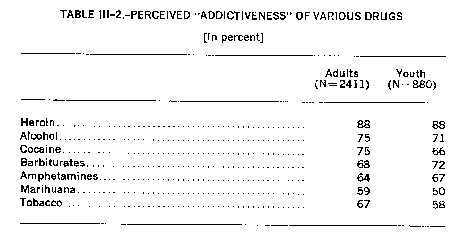
In order to save the new notion of dependence from the fate of its predecessors, WHO added the following important caveat: The specification of the type of dependence is essential and should form an integral part of the new terminology, since it is neither possible nor even desirable to delineate or define the term drug dependence independently of the agent involved. It should also be remembered that it was the desire to achieve the impossible and define a complex situation by a single term ("addiction" or "habituation," respectively) which has given rise to confusion in many cases. Therefore, the description of drug dependence as a state is a concept for clarification and not, in any sense, a specific definition. However, the requirements of law and interdisciplinary communication have doomed this attempt to keep dependence as a wide umbrella sheltering a series of more technical dependence types. All attempts to provide a more comprehensive definition have been faced with the fundamental truth that dependence is a matter of degree. For example, federal legislation and that of many states now define a drug-dependent person as: A person who is using a controlled substance and who is in a state of psychic or physical dependence, or both, arising from the use of that substance on a continuous basis. Drug dependence is characterized by behavioral and other responses which include a strong compulsion to take the substance on a continuing basis in order to experience its psychic effects or to avoid the discomfort caused by its absence. *Many drugs with dependence liability, notably alcohol, are not legally classified as "controlled substances." The problem of degree is submerged in this definition within the terms "continuous" and "strong compulsion." From a legal standpoint, the umbrella definition and vague terms which cannot be applied to individual cases are inadequate, particularly when a finding that a person is drug dependent may result in coercive legal intervention. The Commission applauds the much-belated attempt by the scientific community to sever its conceptual apparatus from the vocabulary of politics and emotion. "Addiction," like "narcotics" and "drug abuse," has a general connotation of evil, suggesting illicit ecstasy, guilt and sin. Because the public image is conditioned more by cultural perceptions than by medical ones, medically-precise meanings simply cannot be harmonized with common parlance. We believe that the concept of drug dependence offers a useful, objective way of describing a highly complex range of drug-using behavior. At the same time, the Commission recognizes that the contrasting requirements of law and science may doom "dependence" to the fate of its predecessors. The only way to avoid this result is for the scientific community to engage in a concerted attempt to formulate a narrower umbrella definition which will meet the specificity requirements of law. For example, the broad concept of drug dependence must, for legal purposes, be oriented toward the degree and types of dependence which impair the social functioning of the drug-dependent person and pose predictable adverse consequences for the society. In addition to this qualification regarding the requirements of law, the Commission also emphasizes the responsibility of the expert community to communicate an understanding of drug dependence to the public, and to modify the exaggerated perceptions which have so long been tied to the concept of addiction. Excising "Addiction" The imprint of history on public attitudes is deep. Addiction still provides the lightning rod for public concern about drugs, and is generally identified with "physically addicting" drugs, the prototype being heroin. The "narcotics," morphine and cocaine, were the models for comparative social danger 50 years ago, and heroin is the model today. "Narcotic" use was identified with depravity, immorality, uncontrolled drug use (addiction) and crime 50 years ago, and the same is true today. Because addiction has been painted as the paramount social and individual danger in drug use, these images and fears extend to some extent to the use of all drugs. Scientific emphasis on the physical attributes of addiction has confirmed and supported the lay fears. As a general guide for public policy and personal conduct, the fear of addiction is a constant. When asked in the context of the National Survey which drugs are addictive in the sense that "anybody who uses it regularly becomes physically [and/or] psychologically dependent on it and can't get along without it," the public responded affirmatively in the following proportions:
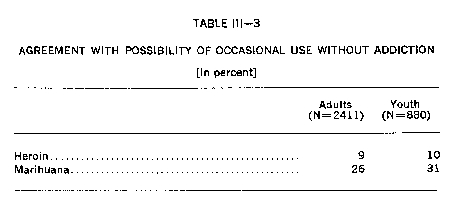
When asked, in an open-ended question, to elaborate on the dangers of proprietary and prescription drugs, the most common response was that they are habit forming. Roughly 50% of the public characterized this as the chief reason for not using prescription drugs. For proprietary drugs, 35% mentioned this concerns a proportion exceeded only by the 40% which feared overdoses. Finally, slightly more than half of those with opinions on the subject have worried that if they took pills they might become dependent on them (48% have worried and 44% have not worried). These responses bear comparison with the intensity of the fear of addiction. That is, all these drugs are perceived by a large majority of people to be addicting; but specific perceptions about the nature of this phenomenon vary according to drug, often inaccurately. When asked whether they agreed or disagreed with the statements that "you can use (heroin or marihuana) occasionally without ever becoming addicted to it," only a small proportion of the public agreed.
Alcohol and barbiturates are not viewed as addicting to the same extent as heroin, and the alcoholic is not viewed with the same fear as the "narcotics addict." For example, the Commission-sponsored National Survey in 1971 found that 66% of the adult public believe that "most people who use alcohol lead a normal life;" only 23% thought the same was true of most marihuana users (Abelson et al., 1972). These differences in perception stem from social factors rather than from failure to ascribe addiction potential to all drugs. Paraphernalia is an important indicator of true addiction in the public imagination; the needle, the spoon and irregularly-shaped cigarettes stand as symbols of drug addiction. Further, the perception of addictiveness and its severity has been tied to class and ethnic considerations since the creation of modern drug policy. The net result is that although most drugs are thought to be addictive, some are thought to be more controllable and less of a problem than others. These discriminations are at odds with pharmacological truth. To redress this situation, we now turn to an overview of the nature of drug dependence and its social impact. TOWARD A FUNCTIONAL UNDERSTANDING OF DRUG DEPENDENCE Research has established that repetitive drug use results from the interaction between a drug, the user and the surrounding environment. Understanding this behavior requires a conjunction of psychological, pharmacological and sociological theory. The concept of drug dependence offers a useful framework for such an analysis. This is not to say that it is without ambiguity, but rather that it is functional, and comports with social, psychological and pharmacological notions, rather than overemphasizing one aspect of this intricate drug-person situation relationship. Psychological Dependence: The Primary Reinforcer To explore the concept of dependence, we must approach repetitive, drug use from a broad psychological standpoint. Ul behavior which is repeated more or less systematically, whether it be dressing in a certain order, watching special television programs, playing poker on Thursday, going to work in the, morning or coining !ionic from work in the evening, has been reinforced. In a sense, a person can be said to be dependent on any of the innumerable liabits of life. The iniportant question, however, is how strongly the bebavior is reinforced and by what factors. Or, put the other way, what is the degree of dependence? Degree of dependence can only be measured by looking beyond the behavior itself to its role in the individual's existence and to the nature of the adjustments which would be made if he could not beliave in the way he has come to depend upon. For example, the compulsive gambler is preoccupied with this particular behavior, often to the, exclusion of his social obligations. Other persons may be, preoccupied with sexual behavior, sometimes to the point of dominating the person's existence and interfering with the lives of others. For many Americans, TV viewing on Sunday afternoon during football season has become a highly significant part of weekend life. This all suggests that recurrent behaviors will fall on a continuum from lesser to greater dependence in terms of their importance. to the individual. The same is true for repetitive drug use, with one important addition. While other habits are only indirectly reinforced through the central nervous system, psychoactive drug use is directly reinforced by its effect on the brain.2 This factor also distinguishes the, notion of vitamin-deficient, diabetic and cardiac-insufficient patients. Psychoactive drugs also modify the capacity of the nervous system to react to, and to interpret the nature of the stimulus. 2 With pharmacologically inert substances dependence is based solely on the so-called placebo effect. It is strictly psychogenic and a reasonable measure of the, existing psychological state of the user or of the user's relationship with the giver. Many other substances which have no direct effect on the central nervous .system may, because of a strong peripheral action, reinforce psychologically and create dependence by drug-induced sensory input or by abolishing unpleasant sensations which arise from the the periphery. (For example, relief of burning sensation by counterirritants, intense catharsis, relief of heartburn by antacids and the like.) Consideration of dependence on non-psychoactive drugs or placebos is introduced here only to show why it should not be confused, as it has been, with the principal issues as they relate to dependence on psychoactive drugs. Underlying the notion of psychological dependence is the same concept of positive reinforcement which describes behavioral responses to many types of rewards such as food, drink, sex, and acclaim. In this instance, however, the specific reinforcer is a drug whose effects are sufficiently attractive and rewarding psychologically at the first trial to motivate the user to repeat the experience. The Pharmacological Component: Reinforcement Potential An individual who has had no experience with psychoactive substances will never become drug dependent. Having once experienced psychoactive effects, many persons will become dependent to some degree. Some drugs are so weak that little harm results. But many are such powerful reinforcers that if every individual in a given society were exposed to all such psychoactive drugs by intravenous administration and then permitted free access to them, a major social problem would ensue. Lesser animals, such as monkeys or even rats, having once experienced a drug such as cocaine and after being given unlimited access, will self-administer the drug until they die. It should be clearly understood by those who decry the depravity of the compulsive drug user that susceptibility is only relative, and under certain conditions, almost any individual can be made to be drug dependent in the most extreme sense of the term. However, specific drugs are qualitatively different in this respect, and it is therefore important to consider the reinforcement potential of different substances. Some drugs offer, from a psychopharmacologic standpoint, high rewards and consequently great reinforcement for their continued use. With drugs such as alcohol, heroin, amphetamines, barbiturates and cocaine, there is a significant likelihood that recurrent administration of large doses will result in a high degree of involvement. However, this result is not inevitable. Many factors such as self-concept, peer orientation and religious feelings may mitigate against the use of large doses and frequent administration, thereby reducing the likelihood of a high degree of involvement. Substances such as amphetamines, when consumed orally, and the minor tranquilizers" appear to have a moderate reinforcement potential. Others, such as marihuana and codeine, appear to have considerably less reinforcement potential. However, just as it is not inevitable that a high level of dependence will occur with heroin and alcohol, it is possible for a person consuming sufficiently high doses to develop a high degree of dependence upon substances such as marihuana and codeine. In such cases, the dependence is reinforced primarily by non-pharmacologic factors related to the individual and his environment. Other drugs, such as LSD and mescaline, appear to possess a self limiting quality due to the temporary development of a moderate degree of tolerance to the psychic effects and to a phenomenon of psychological satiation arising from the intensity and duration of the drug experience. For these reasons, instances of prolonged, frequent self-administration of these substances are rare. Finally, some drugs, such as the phenothiazines (the major tranquilizers) have a minimal reinforcement potential.' Psycho-Social Components Reinforcement for continued use may also stem from non-pharmacologic factors. As noted in Chapter Two, drug-using behavior may be influenced and reinforced by a wide range of psychological and sociological variables, and this is no less true of continued use than of initial use. Various conditioning theories have been advanced to illustrate how people learn to use drugs, adapt them to their needs and seek the drug when needed. Drug dependence is a dynamic process composed of a sequence of phrases during which the behavior may be reinforced by different factors at different times. On one extreme, drug-using behavior may be a function of status definition in terms of class, group, ethnicity or geography. Researchers have noted, for example, the antipathy of many marihuana-smoking youths for glue-sniffing groups (Blumer et al., 1967). Among other drug-using groups, there may be status connotations involved in selecting a particular brand of scotch whiskey or in preferring scotch to bourbon. The cocktail party epitomizes the manner in which drug using behavior may be reinforced by non-drug factors. In these examples, the recurrence of drug use may reflect very little commitment by the user; in other words, repetitive drug-using behavior may not reflect drug-seeking behavior .4 3 'Reinforcement potential" is an absolute laboratory concept, within which psychosocial factors are held constant. In this sense, the major tranquilizers are not reinforcing at all since the "normal" population would not choose to repeat the drug experience because of its side effects. However, we should note that the use of any psychoactive drug can be reinforcing given the appropriate Psychological and social reinforcements. Thus, it is meaningful to say that the major tranquilizers are reinforcing to the patients who agree to use them because of their positive rewards as the individual and his physician define them. 4 These situations might be distinguished from the type of behavior involving elaborate, ritualistic preparation and administration of a drug where the meaning of the behavior rather than the psychological experience (of the drug provide the entire reward. The selection and preparation of a bottle of wine and the rolling of a marihuana joint are examples. There is also the "needle freak," a person who is enamored of the process of self-injecting any substance, including water. By contrast, drug use may be reinforced by less ephemeral variables, as a person comes to rely upon the drug effect to get things done or to avoid unpleasantness. For example, an anxious, unhappily married individual or an obsessional, overworked executive may gradually drink more in quantity, frequency and intensity as he or she finds that this behavior blurs awareness of problems and enhances the ability to avoid their resolution. By the same token, a lonely young person may turn to "speed" when it is popular and readily available, finding with more and more, predictability that he feels potent, alert and energetic and that he shares a common bond with his peers who reinforce each others participation in the entire speed ritual. At the other extreme, the recurring drug-using activity may form the very definitional base of a person's life: "When I'm on the way home with the bag safely in my pocket, and I haven't been caught stealing all day, and I didn't get beat and the cops didn't get me I feel like a working man coming home; he's worked hard, but he knows he's done something. . ." This person's life style is his repeated acquisition and consumption of heroin; and each administration of the drug confirms the success of his life style, representing his wages and his sole reward. The Development of Dependence: Conditioning Many models have been proposed to describe the interactions which take place during the development of dependence. As yet research has not delineated or confirmed these models and their implications. However, at least three identifiable phases of the process of initiation and reinforcement have received attention. The initial phase of beginning and continuing drug use is reinforced primarily by social f actors. Pharmacological and psychological factors become increasingly important in the development and maintenance of dependence. Finally, the permanence of the phase following detoxification and "withdrawal" from the dependent state can be affected by social as well as psychological factors. No one model or theory is uniformly accepted and many questions remain. However, it is instructive to examine some of the current thinking about these factors, and about their interaction in forming and sustaining dependence, without implying thereby that these examples comprise a theory in themselves. On the basis of participant observation of marihuana smokers, Becker identified a three-step process of social reinforcement leading to continued use: technical mastery of the process of administration, identification of the pharmacologic effects and definition of those effects as desirable. Becker's investigations revealed that novices generally reported their first exposure to the drug as unrewarding. After being instructed by their companions regarding how to aerate the smoke (to take deep breaths filling the recesses of the lungs and to hold their breath for maximal absorption of the drug), these novitiates began to identify vague sensations as the drug experience. Finally, they were led to translate what in many cases had been unpleasant responses into desirable ones and therefore into reasons for continuing to use marihuana. The end product of this sequence of events was a confirmed marihuana user. Other factors were delineated by Becker to explain the direction, frequency and intensity marihuana-using behavior might take (Becker, 1953). Social reinforcement alone, however, does not explain subsequent and deep involvement: the weaving of drug use into the fabric of the user's life. One elaborate scheme assesses the role of pharmacologic reinforcement in the context of conditioning theory. Wikler (1970), for example, describes "primary pharmacologic reinforcement" as being either "direct" or "indirect." Direct reinforcement is related to receptors in the body which pre-exist the use of the drug. This corresponds to the concept of reinforcement resulting from stimulation of a reward center in the brain. Indirect reinforcement develops with drug administration and in essence is synonymous with "physical dependence." During repeated administrations a learning process occurs, which Wikler relates to "direct secondary pharmacology reinforcement" or ("psychic dependence") (Wikler, 1970). During the learning process, associations are made between nonspecific environmental conditions or events and the reinforcements, including the central nervous system changes created by the drug. For example, long abstinent persons can be provoked into a mild withdrawal sickness simply by returning to the community where their dependence occurred (Jaffee, 1970). Similarly, it is conceivable that relapse to drug use by abstinent former users may be influenced by non-drug factors which stimulate associated drug-taking responses. This kind of conditioning approach carries important implications for treatment. For example, a treatment regimen might usefully associate with the drug certain influences incompatible with its consumption. The therapist might create, verbally and otherwise, a dislike of the situation each time the drug is administered. In a corollary model some researchers have suggested that behavioral responses may be learned while a person is under the influence of a drug and that these responses may be reduced in strength or be. entirely absent in the non-drug state. Such "state-dependent learning's has been demonstrated experimentally in man using amphetamines, alcohol and amobarbitol (Overton, 1968). Many of the life style concomitants of dependent individuals have been learned while those persons were in the drugged state. It possible that certain relationships and activities necessary for copingor for effective life management have become state-dependent. If this is the case, then detoxification and abstinence, may create anxieties and frustrations, perhaps unrecognized, because the person is less able to cope than h e was in the drugged state. Relapsing would then afford the individual one option for regaining such capacity. Another option is for the therapist to assist transferrence of these skills from the drugged to non-drugged state. The Dependence Continuum We emphasize that the only common denominator of all types of drug dependence is psychological reinforcement resulting from reward associated with the first individual-drug-society interaction and the subsequent increasing desire for repeated reinforcement. In the broad sense of dependence, a considerable segment of the world's population can be said to be dependent on drugs. This drug-using behavior is not necessarily harmful, and in most instances carries no social stigma. All repeated drug taking including that which is medically sanctioned is conditioned by positive reinforcement provided by the action of the drug and by the anticipated response of the user's interpersonal referent, whether it be a physician or a social group. In this respect medical and non-medical use share much in common. All drug therapy, regardless of the pharmacological nature of the drug, or whether the substance is self-selected or prescribed, has a psychological component. Were it not so, advertising to the public would lose much of its force, and physicians would lose a valuable aid in the treatment of the sick, or those who believe they are sick. Consequently, psychological dependence must mean something more than positive reinforcement through drug-based reward if it is to be a functional concept. At this point, then, it becomes necessary to narrow the focus. As is true of non-drug habits, the fact of the recurrence of drug use is unimportant. The crucial question, for the individual, as well as for society, is the degree of dependence and its consequences. For drug use as well as any other behavior, the phase's of dependence actually form a continuum from lesser to greater, from minimal to compulsive. The additional elements from the psychological standpoint are the degree to which the individual is committed to or preoccupied with drug-seeking behavior as part of his life style, and the degree of behavioral disruption which would attend the interruption of his drug taking. From a pharmacological standpoint, these elements are related to the frequency, duration, regularity and intensity of the reinforcements. Determining the existence of psychological dependence on drugs by segmenting the broader dependence continuum requires an arbitrary decision. It will be recalled that the same kind of judgment was made in past years in order to distinguish addiction from habituation on grounds other than physical dependence. The strength of reinforcement is critical; yet, this judgment varies not only with the chemical, physical and pharmacological characteristics of the drug, and with the dose, method, frequency and duration of administration, but also with the personal characteristics of the user and the sociocultural context.
Measuring the Degree of Dependence: Psychological Components The most important factor to consider in describing the degree of dependence is the extent to which drug use has become interwoven in the fabric of the user's life. For some persons, interaction with or avoidance of the world are facilitated by drugs. The more frequently the drug satisfies the person's needs, the greater the likelihood of his commitment to or preoccupation with such use, with a consequent neglect of lower ordered priorities and responsibilities, and a decrement in other social functioning. Personal health, economic relationships and family obligations may all suffer as the drug-seeking behavior increases in frequency and intensity and dominates the individual's life. A parallel consideration in measuring the degree of dependence is the likelihood of adjustment or disruption which occurs when the individual's drug-using behavior pattern is interrupted. When faced with interruption, the individual may respond with some form of substitute behavior or may experience a disruption of his customary behavior patterns. Because the desire to continue the behavior also suggests a desire to avoid being in a position of abstinence, the notion of adaptation is closely related to that of preoccupation. Some experience with interruption may increase the priority assigned to the behavior. The disruption which can occur when an individual is deprived of his drug or a substitute varies with the extent of his dependence. Mild behavioral symptoms may be seen in a housewife deprived of her diet pills, such as lethargy, irritability, reduced amount of housekeeping, or an unusual afternoon nap, while, more intense drug-seeking behavior, including aggression, may be seen among compulsive speed users. To a large extent, these symptoms can be exacerbated by the pharmacologic effects of the drug; in other cases they may be products of anxiety or the unmasking of behavior formerly under pharmacologic control. Many treatment programs for drug-dependent persons operate on the premise that therapy must provide alternative supports for the individual previously preoccupied with drug taking. In large measure, the potential for success is related to the intensity with which the individual participates in the design of the program, and on the strength and numbers of supports within the alternative system. As an awareness of these interrelationships has increased, some programs have made the system and the treatment synonymous. Alcoholics Anonymous was one of the first such systems. During the last decade many therapeutic communities, relying on the pioneering experiences of Synanon, have emerged to deal with heroin, amphetamine and alcohol dependence. For many of these programs, particularly those dealing with severely dependent persons, a prerequisite to participation is a drug-free status. This is partially in recognition of the disruption attending interruption of drug-using patterns. It might be useful at this point to relate this discussion of psychological dependence to the patterns of drug-using behavior developed in the previous Chapter. By definition, experimental use is not a recurrent drug-use pattern. Recreational and circumstantial use, if systematically repeated over a short or long period of time, would reflect the positive reinforcement underlying the notion of psychological dependence; but these, forms of drug-using behavior, as we have defined them, are not sufficiently interwoven in the fabric of the users' lives to impair social functioning. The functionally important area of the dependence continuum includes intensified and compulsive use. Intensified use may be of the regular long-term variety which involves continuous intoxication followed by periodic drug-free intervals of several days' duration-the intravenous amphetamine user, for example; or it may be of the regular daily use variety with long drug-free intervals during the day-the heavy social drinker, for example; or it may be of the intense episodic or spree variety-the patterned binge drinker, for example. The classic type of drug dependent person, of course, is the compulsive user who rarely has any drug-free intervals. The chronic alcoholic and heroin dependent person are the most recognizable examples. Physical Dependence: The Secondary Reinforcer All drugs which induce rewarding subjective responses have the capacity to become psychological reinforcers. Whereas this is the primary force leading to intensified or compulsive use patterns, certain drugs, when administered in sufficient dose and frequency, are capable of producing physiological changes requiring repetitive use in the, sense, that physical illness will ensue if the drug-taking behavior is not continued. This highly specific abstinence syndrome, which is what is generally meant by "physical dependence," can be reversed by readministration of the drug which causes it. Substitution of another drug or drugs from the same pharmacologic class can also accomplish reversal. Of course the symptoms themselves can be ameliorated by administration of substances from other pharmacological classes although these substances will not reverse the patho-physiological process of withdrawal. Fear of drug-deprivation, with its attendant physical and psychological agonies, serves as a powerful secondary reinforcer for repeated and, in these cases, continuous drug use. In the absence of the drug or a substitute, behavioral disruption will occur. The intensity, length and nature of the disruption varies according to the drug, the method of administration, the dose and the length of time the drug has been used. The rapidity with which the physiologic need develops varies similarly. Abrupt deprivation of use of certain stimulants, such as cocaine and amphetamines, following prolonged and continuous use, may precipitate a rebound withdrawal illness characterized by psychological letdown and depression, and by extreme exhaustion generally compounded by previous lack of sleep. The array of non-specific symptoms and signs results from continuous agitation, absolute insomnia and acidosis from food and water deprivation. In contrast to the highly specific morphine and barbiturate syndromes, this "withdrawal" illness can not be prevented by continued readministration of the drug. Lastly, there exist a number of drugs, such as marihuana, betel and nicotine, with mixed depressant and stimulant properties, which create strong anxiety when use of the drug is discontinued. Since no evidence has been adduced which implicates a physical dependence, the basis for this anxiety is presumably a function of psychological, social and cultural variables. Summary Drug dependence, in its broad sense, involves much of the world's population. Conceptually, drug dependence should be viewed as a continuum starting from a low degree of dependence as measured by minimal individual preoccupation with drug-using behavior and minimal disruptive effects upon interruption of the behavior, and escalating to compulsive dependence as measured by total preoccupation with drug-using behavior and serious behavioral disruption attending deprivation of the drug. Drug dependence exists in innumerable patterns and in all degrees of intensity depending upon the nature of the drug, the route of administration, the dose and frequency of administration, other pharmacological variables, the personality of the user and the nature of the environment. In this connection, it is important to discard the undimensional concept of individual loss of self-control which has long dominated scientific and lay concepts of "addiction." Most people who use psychoactive drugs do not succumb entirely to the pharmacologic. properties of the drugs. All of the factors which we have noted interrelate in distinctly different fashions with different individuals under different circumstances. For this reason, there can be no static model of drug dependence within which finite values are assigned to these various factors. Drug dependence is a dynamic phenomenon, and the formulation of social policy must reflect its complexity and relativity. Further, the primary basis of dependence for all drug use is psychological reinforcement based on reward. This reward is composed of two elements: it stems from whatever brain effects occur, some of which the user may experience subjectively, and from complicated sequences of psycho-social variables shaping the needs satisfied by the drug experience, and drug-seeking behavior. When physical dependence is a part of chronic drug administration, the threat of the aversive effects of withdrawal serves as a powerful secondary reinforcer of the drug-using behavior. Drug dependence is not necessarily harmful either to the individual or to society. The social cost of drug dependence is related directly to the intensity of user-preoccupation. The compulsive extreme of drug dependence may lead to disorders or defects of behavior with serious implications for the public safety, health and welfare. However, many forms of drug dependence do not carry adverse social consequences, as is illustrated by the widespread chronic use of substances, such as tobacco and coffee, with such weak psychoactive properties that they are measurable largely in subjective rather than objective terms. Heavy and prolonged chronic use of the substances may damage organ systems and result in injury to individual health. But they do not induce physical dependence or result in anti-social behavior even upon prolonged or excessive use. This factor distinguishes them from all other dependence-producing drugs. WHO's appreciation of the need to separate social impact considerations from the simple description of drug dependence was stated clearly in its 1965 statement: Further to clarify our meaning, the nature and significance of drug abuse may be considered from two points of view: one relates to the interaction between the drug and the individual, the other to the interaction between drug abuse and society. The first viewpoint is concerned with drug dependence and the, interplay between the pharmacodynamic actions of the drug and the psychological status of the individual. The second-the interaction between drug abuse and society-is concerned with the interplay of a wide range of conditions, environmental, sociological, and economic. The 1957 Committee tried to encompass both points of view when, in its definition of addiction, it listed characteristics of which some were pharmacodynamic and other psychological and socioeconomic, perhaps thereby compounding some of the existing confusion (Eddy et al., 1965). 'The 1957 WHO Committee statement quoted earlier in this chapter on page 124. EVALUATING THE SOCIAL IMPACT OF DRUG DEPENDENCE Any analysis of the social consequences of dependence, as they relate to public safety, health and welfare depends on both the degree of dependence and the characteristics of the drug, rather than on the fact of dependence itself. Dependence, Health and Behavior No rational social policy would aim to eliminate drug dependence per se. There are societies in which virtually an entire population is dependent on natural products of plant origin. Many of these plants, like the betel morsel, are used by millions of people and produce no striking effects on the central nervous system. The only subjective sensations are those of mildly pleasant stimulation. Psychological dependence is well established; many of the users spend much of their income to acquire the substance, and even the more intelligent users suffer a considerable mental letdown in its absence. When the risk associated with a type of drug dependence does not involve drug-influenced behavior, but is rather limited to possible danger to individual health, it is the Commission's view that private normative choices should prevail, and that the social policy decision is of an entirely different order than that required by behavior influencing drugs. As already noted in Chapter One, the primary policy consideration here is the behavioral impact on the public safety, health and welfare. With regard to stronger psychoactive drugs, however, repeated use may lead to intensified and compulsive patterns of use with the resultant neglect of other activities, to the point of decrement in or destruction of other social functioning. Whatever the appropriate legal policy toward availability of any given substance, and whatever the relative impact on behavior of chronic use of these substances, a crucial element of social policy must be to minimize the proportion of the population reaching high degrees of dependence on all such substances. The Vulnerability Factor The prevalence of high degrees of dependence seems to rest more in the nature of the soil than in the characteristics of the seed. The individual user, rather than the drug, is the core of the problem; compulsive drug use is generally thought to occur most frequently in emotionally unstable persons who have difficulty in coping with reality. Drug dependence is in this sense an attempt at adaptation; the drug-dependent person seeks to alter his personal situation not by changing his environmental circumstances or his pattern of behavioral reaction but by modifying his affective reaction to and perception of those circumstances. Secondarily to this, his entire pattern of interacting with his environment may change. The concept of psycho-social vulnerability rests on the notion that as environmental stresses and frustrations become stronger, an increasing proportion of the otherwise susceptible population will respond through self-changing responses such as compulsive drug use. On the basis of this hypothesis, if an otherwise susceptible individual can either master the environment or remove himself from the adverse conditions, he may broaden his options and reduce the likelihood of drug dependence. 'From this point, drug dependence will refer only to the compulsive end of the
dependence continuum; drug-seeking behavior with a high degree of user preoccupation. Although the data are inconclusive, many observers believe that American minorities, such as the Spanish-speaking, blacks and native Indians, have a higher risk potential to drug dependence in the sense that they are disproportionately poor and leave disproportionately higher percentages of drug-dependent persons. Since social and economic forces continue to restrict the upward mobility of these groups, particularly the young males, they remain at high risk to development of drug dependence. Whatever the accuracy of this hypothesis, it is clear that certain populations in any society at any given time are more vulnerable to intensified or compulsive drug use than others. The choice of drug varies within and across societies. Although this phenomenon has not been studied carefully, the Commission's impressionistic survey of consumption patterns in societies throughout the world indicates that the choice of substances has an affective component and differs among those segments of the population most susceptible to intensified or compulsive drug-using behavior. In the United States, for example, the most vulnerable groups appear to demonstrate a preference for the depressants, particularly alcohol and heroin, which are most likely to obliterate rather than intensify their awareness of their social condition and to reduce the anxiety which wells up in reaction to this condition. In other societies however, the reverse may be true. Vulnerable populations in Japan turned to the stimulants after World War II. We should note, however, that a persuasive case can be made for the proposition that availability is the crucial determinant of chronic drug-using patterns in any society. For this reason, a comparison of different drugs in terms of relative danger to society is impossible. In each society a multitude of factors will determine the levels of use of different drugs, and the price which society bears as a result. At best, we can speculate about the cumulative social cost accruing from widespread chronic use of a drug under conditions of unrestrained availability. Comparisons between drugs would be based on their relative potential for reinforcement and on their relative capacity to influence behavior. (See Table 111-1.) Available cross-cultural information does suggest that there may be a maximum penetration level of drug dependence in any society. Even in Hong Kong where heroin is available and inexpensive, the prevalence of intensified and compulsive use does not exceed 4% of the entire population although this proportion is higher (about 11%) among males over 20 years of age. Similarly, heroin and opium are easily secured in Thailand, but the proportion of chronic smokers does not exceed 2% of the entire population or 10%, of the adult male population. In the United States, the proportions are roughly the same for chronic alcohol use: about 15% of the total population and about 15% of the middle-aged population. Available estimates also suggest that the level of chronic cannabis use in Egypt may be of the same order. Interestingly enough, the prevalence of chronic opium and morphine dependence in the United States at the turn of the century when availability was relatively unrestricted probably never exceeded 1% of the adult population. As availability of a substance becomes more restricted through formal legal controls, the maximum penetration level of dependence probably becomes lower. Thus, under any given social policy in any given society there is probably a maximum social cost. On the other hand, no matter how restricted the legal conditions of availability for a given substance, there is also likely to be a minimum penetration level. From this perspective, the best that a society can hope for is to reduce the level of intensified and compulsive use to that minimum, and keep it contained at that level. The Relevance of Social Response Finally, the adverse behavioral consequences of certain types of dependence may be tied to social policy and to institutional responses to the drug-using behavior. Among those dependent on highly reinforcing drugs, the level of dependence likely to be reached is increased by social policies which prohibit availability of the substance to the drug-dependent person. This is because the "hustle" necessary to acquire the drug will exaggerate the user's preoccupation with drug-seeking behavior. Similarly, prohibitory policies also increase the adverse social impact of drug-abstinence behavior of those physically dependent on the prohibited drugs. Consequently, appraisal of the social cost of a given type of dependence must also take into account the potentially counterproductive effects of the institutional response. Present Social Impact Turning now to the social impact of dependence on various substances in the United States today, we find first that public perception of the problem is not related either to the prevalence of dependence or to the environmental and pharmacologic aspects of the issue. Alcohol Alcohol dependence is without question the most serious drug problem in this country today. Alcohol users far outnumber those of all other drugs and are found along the entire continuum of dependence. The reinforcement potential of alcohol and its potential for behavioral disruption are high. Use of the drug is pervasive within the general population, and its ready availability facilitates the development of high degrees of dependence among vulnerable populations. The prevalence of intensified and compulsive use among the entire alcohol using population is roughly 10%, and a serious decrement in social functioning is noticeable in half of this group. While there are many abstainers and the number of non-dependent users is large, alcohol use nonetheless carries a substantial social cost. The risk of individual involvement is accentuated also by the pervasive sentiment which tends to exclude alcohol from classification as a drug, thereby eliminating it from the concept of "drug abuse" and the social problems which go by that name. As noted in Chapter One, according to the National Survey, alcohol is regarded as a drug by only 39% of the adult population and 34% of the youth population. Twice-daily use of the drug is viewed as drug abuse by only 36% of the adults and 37% of the youth in contrast to the use of heroin "once in a while," which is regarded as drug abuse by 82% and 80% of these populations. Finally, only 7% of the public mentioned alcoholism as a serious social problem, as compared with the 53% who mentioned drugs. Heroin Heroin is a highly reinforcing drug and, in the present social context, demonstrates a selective attraction for high-risk, vulnerable populations, in particular those with minimal opportunities for a rewarding life style. The risks of compulsive use are exacerbated by the prevalence of intravenous administration and the rapid development of tolerance. The dependence continuum is compressed at the maximal end and movement through the phases of dependence is rapid. Even though the incidence of ever-use among the adult and youth populations is less than that of any other drug, the prevalence of dependence among the exposed population is high, though not as high as popular belief would suggest: available data suggest that 25% to 50% of those in high risk populations who try heroin may become dependent. Heroin dependence is disproportionately high among the most vulnerable segment of the population; young males in the nation's urban centers. Because dependence tends to develop during the early years of adulthood, social and economic integration is inhibited at the most crucial time, to the detriment of the society in general and to the users' immediate social group in particular. For this reason, the social cost of heroin dependence is substantial. Unfortunately, present social policy tends to exacerbate this cost even more. Because of enormous pressures characterizing the present social-legal-medical response, a disproportionate degree of behavioral disorganization and disruption accompanies heroin dependence. Barbiturates Barbiturates are pharmacologically similar 'to alcohol, involving the same dependence liability and potential social impact. At the present time, however, no major social cost arising from compulsive use has been specifically identified. This is largely because these substances were hitherto distributed primarily through medical channels, and their use has been generally hidden. Recently, episodic barbiturate use has appeared increasingly in the streets among youth populations, posing serious problems in certain urban areas. For the most part, however, high degrees of dependence have not been apparent. The Commission suspects that the prevalence of dependence may be much higher than is generally estimated. The depressant properties of the barbiturates have already attracted the same populations who are most vulnerable to alcohol and heroin dependence, and these drugs are often used in combination or as alternatives. Even more important, however, the frustrations so commonly felt among housewives appears to be fertile soil for the development of sedative, anti-anxiety responses. Increased barbiturate use in the past decade parallels the increase in alcohol dependence during the late 1950's among this same population. The Commission believes that barbiturate dependence may be the modern equivalent of the hidden opiate dependence of the late 19th Century. Therefore, even though a verified social cost remains relatively low, the Commission attributes this fact less to the pharmacologic qualities of the drug than to the present medical orientation of the distribution system. As shown in our National Survey figures in Chapter Two, the incidence of barbiturate use outside the medical system has increased significantly in recent years and promises to result in more serious problems of episodic and multi-drug use in the future, and perhaps an increased prevalence of intensified and compulsive use patterns. Even so, the appropriate social response must be formulated in the context of continuing therapeutic needs within the medical system. Amphetamines and Related Stimulants Amphetamines and related stimulants, when administered intravenously, have a high reinforcement potential. Consequently, strong psychological dependence can develop, even though these drugs do not induce physical dependence. The potential social cost of amphetamine use, as measured by the prevalence of compulsive use, is much lower than with any of the depressants, largely because continued use of increasing amounts beyond the stage of pleasant mental and physical exhilaration leads generally to unpleasant and unbearable hyper-excitability through psychotic manifestations. For this reason, compulsive use is rarely sustained on a chronic basis. This does not mean, however, that compulsive use of amphetamines cannot present a significant social problem. In post-war Japan, thousands of persons, particularly adolescents, turned to readily available methamphetamine. Enormous problems in social reconstruction were created. The establishment of special psychiatric hospitals and the formulation of stringent legal controls were necessary to curb the increased use. Fortunately, cultural homogeneity and national purpose facilitated effective measures to deal with this problem. In the United States, compulsive use of amphetamines did occur among a highly vulnerable segment of the adolescent population during the middle and late 1960's, although the extent of this phenomenon was exaggerated at the time and has diminished rapidly since then. On the other hand, there is mushrooming evidence that large numbers of middle class adults, particularly women, have developed chronic using patterns of orally administered low dose stimulant preparations. Although this phenomenon may have been halted by modified prescription practices, most of the dependence on these substances at the present time does appear within the context of the medical distribution system. In contrast to the barbiturates, medical indications for the amphetamines and related stimulants are highly limited. Cocaine Laboratory experiments with animals have demonstrated beyond dispute that cocaine is the most powerful reinforcer of all psychoactive substances. Although neither tolerance nor physical dependence develop, this drug has a higher potential social cost than the amphetamines. Little social cost has actually been verified in this country. Although increasing, the incidence of use and the prevalence of chronic use remain relatively low. The route of administration normally employed, sniffing or "snorting," is less likely to induce high degrees of dependence than intravenous use. At the same time, cocaine has demonstrated its attraction to the same populations vulnerable to heroin dependence and to intensified amphetamine use, although this factor may be in part attributable to multi-drug use and an overlap in the acquisition ritual. Prudent policy planning demands that the nature of cocaine-using behavior be kept under close scrutiny, and that the currently inadequate data-base on cocaine and the behavioral concomitants of its use be significantly improved. Hallucinogens The dependence liability of hallucinogens is relatively low. Although indiscriminate, sometimes daily use was not uncommon a few years ago, the combination of rapid tolerance, aversive side-effects and psychological satiation minimize the likelihood of intensified or compulsive use. For this reason, these drugs are generally utilized only for "spree" circumstantial or recreational use, generally with the goal of self-exploration or enhanced awareness. Consequently, dependence is not a significant social concern, and attention should instead be focused on the behavior potentially influenced by the drug experience itself. Cannabis Particularly in the doses commonly used in this country, cannabis is not a highly reinforcing drug. This drug does not induce physical dependence and no significant degree of tolerance is developed. Although compulsive use of the more potent forms of cannabis does occur in cannabis-origin countries, there is no evidence that such a use pattern is developing in this country where use is generally experimental or intermittent and is confined primarily to the less potent forms. Although there is some evidence that the availability of hashish is increasing, the users generally titrate their doses to reach the desired effect. Finally, most persons using cannabis heavily in the United States can be classified as intensified rather than compulsive users. Consequently, dependence on marihuana is but a minor problem in the United States today. We should note, in this connection that whatever tranquilizing effect marihuana has may be sought in alcohol and other sedative, anti-anxiety drugs. For this reason, the likely penetration level of cannabis dependence is fairly low. II -- DRUG INDUCED BEHAVIORA variety of social forces mold and reinforce desirable individual behavior. Can the momentary influence of a drug loosen the socialized restraints, inducing the individual to behave in ways he would not otherwise choose? The history of psychopharmacology is replete with examples of behavior changes associated with the acute administration of drugs. A traditional, widely shared assumption of current thinking in biological science is that there are an infinite number of interactions between behavioral and pharmacological systems. The description of these interactions requires information about concomitant variations between the characteristics of the behaviors and of the drugs. Information about the behaviors should be specific with respect to factors such as intraindividual and interindividual variability, type of behavior and past behavioral history. Information about the drugs should be specific with respect to such items as dose-response relations, time-response relations, dose-order relations, localization of the site of drug action, dosage forms, routes of administration, absorption and distribution in the body and biological fate. Such drug and behavioral variables can be further modified by environmental variables such as set and setting. The resultant myriad of drug-induced changes in behavior cannot be fully understood unless all these underlying variables are so specified. Furthermore, recent advances in neurochemical research suggest that many drug effects on behavior are mediated by neurochemical events and that these relationships are reciprocal in the sense that changes in one may affect the state of the other. If all of these possible combinations and permutations appear hopelessly confounded, it should simply caution us in making any premature generalizations about drug-behavior interactions. While it is true that a full understanding of these interactions is restricted by the limits of present empirical data, the presence of such intricacies should temper an initial desire to simplify the drug-behavior story and encapsulate it in succinct clich6s suitable for mass media. Such attempts in the past have probably contributed to the need for this Commission in the first place and to do so again would be to ignore that information which the Commission has marshalled. Nonetheless, there is a certain utility in discussing several important ways in which drugs may affect behavior. Although the interaction among all of the drug-person-environment variables will not be fully explored in this discussion, the Commission believes it important to sketch certain categories which are directly relevant to man's conduct. Since behavior has been defined by some as activity of an organism which is observable by the organism itself or by other organisms, drug-induced change in perception is a suitable place to begin. IMPACT ON PERCEPTION Perception is defined as those processes by which man receives or extracts information about the environment through sensory apparatus (for example, vision and audition). Drugs can alter the sensitivity of these systems and thereby alter perception. Space and time relationships are examples of perceptions commonly affected by drugs. Marihuana, alcohol, hallucinogens and other drugs have been noted to expand or contract estimates of elapsed time or distance. For example, in simulated driving tests involving use of moderate doses of marihuana, some subjects perceived themselves to be driving at a speed faster than that actually being simulated. Similarly, some user-perceptions relating to enhanced sexual performance under the influence of marihuana are thought to relate to temporal distortions as well as to abolition of negative perceptions. Temporal distortions have also been described by amphetamine users who perceive themselves to be performing more activity in shorter time spans. Drug effect may simply be a facilitating factor in many alterations of perceptions; the effect of setting, for example, cannot be overlooked. However, the occurrence of illusions and hallucinations seem less influenced than other perceptual changes by non-drug factors. Hallucinogens such as LSD increase the visual threshold in man, cause arousal of the central nervous system and allow for hyperexcitation to visual and auditory events. Colors may seem more saturated and sounds may seem louder. Similarly the delirium tremens associated with alcohol use is a state involving visual hallucinations and spatiotemporal distortions. Drugs may also produce changes in specific anatomic areas of sensory organs. For example, several phenothiazines (used for tranquilizing and sedative effects) have produced pigmentary degeneration of the retina, and, occasionally, blindness. Some drugs, such as the anti-depressant imipramine, have even precipitated glaucoma in susceptible individuals. Drugs may also interfere with the user's perception of his own abilities. Some studies have noted that student amphetamine users tended to overestimate their capacity to make sound judgments and solve mathematical -problems, and amphetamine-using soldiers tended to overestimate their performance in certain routine monotonous tasks. The important implication of any of these perceptual changes is that behavior may be altered from the expected to the unexpected unless the user is able to compensate for these effects as do some sophisticated users of marihuana and alcohol. The degree to which the altered behavior is of concern to society relates to the type of conduct which may be affected by the perceptual change. This could range from being late for an appointment to foolishly undertaking hazardous tasks. IMPACT ON MEMORY Man's behavior is dependent in part on what he has learned, either directly from experience or from others. To the extent that drug use or any other event affects man's ability to acquire knowledge or recall it, it may influence his ability to anticipate the consequences of his behavior. A full discussion of learning and memory processes is beyond the scope of this Report; indeed, these processes are currently the subject of intensive research, covering an entire range of variables from genetic ones to biochemical ones. The controversial nature of these investigations into learning and the inadequacy of the data on the impact of drug use on man's learning process preclude detailed consideration here. However, some general observations may be made regarding the influence of drugs on memory (short-term and long term storage and retrieval). Retention of acquired learning is hindered by amnesia or forgetfulness. Amnesia is a state of decreased retrieval produced by trauma or by chemicals; forgetfulness is a state of decreased retrieval produced by passage of time or by preoccupation with sensory input during time. Among the precipitators of amnesia are electro-convulsive shock, anoxia, anesthesia (barbiturate and ether), carbon dioxide and certain antibiotics. With regard to psychoactive drugs in particular, anesthesia produced by either ultra-short-acting barbiturates or by ether can precipitate amnesia. Similarly, "blackouts" are commonly reported after drug-taking episodes, constituting a form of drug induced amnesia. Drugs may also induce forgetfulness. It is common knowledge that moderate doses of barbiturates and alcohol can reduce or ablate newly acquired knowledge; in recognition of this phenomenon, a recently proposed highway safety device would require the driver to recall a randomly displayed series of numbers before being able to engage an automobile ignition system. Occasionally recall may be facilitated by drugs. Marihuana, LSD, and ketamine act vicariously to retrieve stored images and "project" them into some sensory modality-vision, audition, smell. The use of short-acting and intermediate-acting barbiturates to facilitate recall of long-term memory in psychoanalysis or espionage (truth serum) is well documented. Finally, nitrous oxide has been shown in some circumstances to reduce forgetfulness. ALTERATION OF MENTAL STATES Profound mental changes, both transient and permanent, have been attributed to psychoactive drugs. These include some drastic changes in mood and psychological status. Humans are normally constrained by sets of socially-induced inhibitions from engaging in certain behaviors. Drugs such as alcohol and other sedative hypnotics tend to relieve these socially-inculcated anxieties thereby increasing the likelihood of the usually restrained behavior. The garrulousness and amorous behavior associated with cocktail parties and the unabashed laughter following marihuana use are examples of this disinhibition. Indeed such actions are so common as to form a battery of socially recognized excuses for normally embarrassing behavior. With prolonged use of high doses of some drugs, notably alcohol, and the barbiturates, general irritability increases and aggressive threatening acts may occur. The challenging conduct frequently encountered in bars constitutes a recognizable example. Some drugs, notably amphetamines, cocaine and alcohol, can produce a sense of bravado and have reportedly been used intentionally to support the performance of daring acts. Euphoria associated with initial opiate experiences may promote thoughtless or indiscriminate actions. Amphetamines may induce garrulousness, hyperactivity, rash promises and the like. At the opposite pole, depressive states and suicidal acts are associated with drug taking, particularly with the sedative-hypnotic substances. This fact was overlooked when some sedative-hypnotic, drugs were incorrectly promoter as tranquilizers appropriate for the treatment of depression. Almost all psychoactive drugs can produce transient confusional and delusional states. The use of hallucinogens, particularly by naive, control-oriented individuals, can produce transient panic reactions, as the. user apparently loses control of his environment. Phencyclidine has been associated with panic states involving fear of suffocation arising from the drug's powerful action on the muscles of respiration; hydrocarbon inhalants have been associated with similar states of fear arising from displacement of oxygen in the inspired air. Acute confusional states occur with overdoses of alcohol, barbiturates and other sedative-hypnotic drugs. Alcohol and marihuana among' other drugs have been known to produce depersonalization. Subacute and chronic psychotic episodes, particularly paranoid reactions of a persecutory nature, are associated with the major stimulant drugs--cocaine, amphetamines and amphetamine-like substances. A prolonged "spree" use of stimulants may induce a psychosis similar to that induced by the hallucinogens (LSD, psilocybin, mescaline and others). These drugs also have the specific capacity to induce an acute psychosis with a single effective dose even in so-called "normal" individuals. As with all of the drugs mentioned above, emotionally unstable individuals are especially susceptible to drug-induced behaviors of this type. 'This is probably due in part to sleep-deprivation which may last 5-10 days. It is well
established scientifically that prolonged sleep-deprivation alone can induce an acute
psychosis. The exact relation between the drugs and these reactions is unclear. Although the acute reactions mentioned above are quite generally accepted as being at least partially drug related, the origins of the chronic psychoses, either drug-precipitated or residuals after termination of use, are much more debatable. Perhaps the most confusion and misinformation devolves about drug-induced "brain damage" and its relation to mental dysfunction. With but few exceptions, disorders of behavior cannot be related specifically to detectable morphological change in the brain, either at the gross or microscopic level. Whereas gross and cellular changes have been associated with chronic alcoholism, and with very heavy intake of barbiturates and the hydrocarbons, profound behavioral and marked mental changes may also be observed following long-term, chronic use of most other potent psychoctive drugs without any detectable cellular alterations whatsoever. In fact, this is usually the case. Thus, any statement that no mental dysfunction occurs because no brain damage can be demonstrated is in error. The social significance of these drug-induced mental changes is manifested in several ways. Those disruptions of mental function associated with illusions and hallucinations, confusional states, and the like, cause the individual to misinterpret his environmental impressions and react in an abnormal manner. This may take the form either of complete withdrawal and negativism, or at the other extreme, of violent and aggressive responses to situations which otherwise would not have been considered to be threatening. In either type of response, regard for welfare of self or others may be impaired or entirely lost leading to violent behavior and even to suicide and homicide. IMPAIRMENT OF PSYCHOMOTOR FUNCTION Depressant drugs as a class-alcohol, barbiturates, volatile hydrocarbons and a multitude of lesser drugs-with the common properties of inducing unconsciousness and anesthesia in large quantities, produce varying degrees of motor incoordination as a dose-related response. This phenomenon is so much a matter of common experience with the alcohol-consuming public that it hardly warrants description. These drugs impair the function of all of the highly integrated response mechanisms in the nervous system which control all coordinated acts such as ambulation, operation of motor vehicles and the like.' Depressant drugs by impairing higher brain functions and distorting or rendering inactive sensory input, or by rendering the user inattentive to these controlling signals, may make him completely incapable of performing complex voluntary actions. Unfortunately, such impairment may occur with quantities of drugs much smaller than those required to prevent the muscular response itself. Thus, the driver of a motor vehicle under the influence of relatively small quantities of alcohol may lose control, not because he is unable to perform the mechanical act of driving, but because his attention span is reduced, his vision is impaired, his memory of a turn in the road is obliterated or he fails to hear the horn of a passing vehicle. In other words, simply because a drug user can "walk a straight line" after drinking does not necessarily qualify him to drive a motor vehicle. " Less complicated psychomotor tasks do not require all of this biological
machinery to be In action. For example, a blind person may feed and dress himself without
the sensory input from vision and a deaf person can even operate a motor vehicle without
auditory input, providing other sensory input is not impaired or distorted. Stimulant drugs, notably the amphetamines, have been widely used to permit truck drivers to endure long trips and athletes to carry on beyond their ordinary limits of endurance. Whereas such drugs may mask the subjective effects of fatigue, they do not correct the adverse effects of fatigue on attention, visual discrimination and other factors which control proper psychomotor functioning. Amphetamines were used by all belligerents in World War II to prolong psychomotor performance. It was common practice for Allied pilots to take these drugs after a bombing mission in Germany to permit them to get back to their home bases in England. A surprisingly large number made the return flight to England safely but crashed their planes on landing. The subtle effects of fatigue on psychomotor and other sensory components of proper psychomotor functioning are not corrected by this class or, for that matter, by any other class of drug. SUMMARY In summary, drug taking has the potential for affecting man's behavior in a number of overt as well as subtle ways. Drugs can affect perception, thereby influencing the way man regards his environment. Drugs can affect memory, thereby influencing man's capacity to anticipate the consequences of his actions. Drugs can alter mental states, thereby affecting his capacity to interpret and order his environment. Drugs can alter psychomotor function, thereby affecting man's capacity to respond appropriately to his environment. These effects are neither uniformly negative nor uniformly predictable. The number of variables affecting the interaction between a drug, a person and his environment is perhaps limitless. We can state with assurance only that drug-induced behavior is as multi-faceted as all other human behavior. III -- IMPACT ON PUBLIC SAFETYAll other ends of government are secondary to its responsibility to ensure the public safety; and the cornerstone of any viable social organization must be that each individual have due regard for the life, limb and property of others. Fear that the drug user will violate this precept has been a common feature of the periodic cycles of public concern about drugs. We have indicated that drugs can affect behavior in a multitude of ways, some subtle such as decrement in short-term memory, and others more overt such as aggressiveness and psychotic disorders. Naturally, public concern has always been greatest for drug-induced violence or assaultive behavior. But the public safety may also be endangered by drug-influenced recklessness or negligence. In this section, we will assess the impact of drug use in the two areas of the most concrete interest: crime and driving. DRUGS AND CRIME Fifty-three percent of all adults surveyed in the National Survey spontaneously mentioned drugs as one of the most serious problems facing our nation and in need of attention. As noted in Chapter One, the "drug problem" conjures up many images and conveys many things to many people; but for 13% of all those who mentioned this problem, the primary concern was the relationship between drugs and crime. When the National Survey queried the respondents directly on this question, it found that more than half of all adults and about two thirds of our youth believe that marihuana users often commit crime to buy more of the drug and that they "often commit crimes that they would not otherwise commit." The American public is even more convinced of heroin's direct relationship to crime; more than 90% of both youth and adults believe that "heroin users often commit crimes to get the money to buy more heroin" and that they often commit crimes that they would not have otherwise committed. The extent of agreement with these statements, however, was found to differ significantly according to both the age and drug experience of the respondent. (See Table III-4.)
In order to probe some of the factors responsible for this set of beliefs, respondents were also asked to indicate their experience with what they perceived to be drug-related crime. The data show that about one-third of the adults reported having experience at some time with someone breaking into their home or place of work to steal some property. Fifteen percent stated that the theft occurred at work, 19% indicated that it took place at home and 67% had no recollection of .such an incident. Then respondents were asked if they, personally, had ever been attacked, mugged or robbed or if another member of their household ever had such an experience, or if this bad happened to someone "they knew well." Again, about one-third (31%) responded affirmatively; that is, if they themselves did not have such an experience, they at least knew someone who had been victimized in this manner. These individuals were then asked if they had reason to believe that the attacker was a drug user or was under the influence of alcohol at the time of the offense. The data reveal that just under onefourth of those with such personal experience or knowledge believed that the criminal may have been a drug user. Specifically, 77o believed the attacker or robber was a drug user, 2% thought he was under the influence of alcohol, and 22% said they did not know. In general, those who reported either being a victim or knowing a victim of personal crime were disproportionately young, college educated, and from a large metropolitan area, usually located in the Northeast. Users of marihuana and alcohol (behaviors which also correlate with age and education) were also disproportionately likely to have been a victim or to have first-hand knowledge of one. Thus it appears that the generalized belief in the existence of a direct relationship between drug use and crime derives considerable reinforcement from the public's experience with both personal and property crime. As the Commission noted in its first Report on marihuana, the relationship of drug use to criminal behavior is difficult to unravel. Its investigation requires more than an examination of the pharmacological properties of a particular substance and their effects upon the individual user. Rather, additional factors to be considered include dosage level; the immediate and long-term physiological and psychological effects on the individual; frequency, intensity and duration of use; the purity, potency or type of drug used; the potentiating effects of drugs used in combination; personal expectations; motivations for use; set and setting; and the general impact and influence of the larger society upon the individual. In order to assess the nature, direction and strength of the alleged relationship between drug use and antisocial behavior, particularly violent and non-violent criminal and delinquent behavior, the Commission examined several hundred documents in the professional and research literature and conducted a number of its own studies. Review of the professional and research literature, including a number of studies conducted either by or for the federal government, have led the Commission to conclude that it is difficult, if not impossible, to establish a direct relationship between crime and the use of various drugs; but if one cannot say that the use of any drug in and of itself is directly responsible for the commission of a criminal act, it is possible to demonstrate that drug use in combination with a number of physiological, psychological and social factors may assume an important role in the exacerbation of criminal, delinquent or other antisocial behavior. In the pages which follow, we will briefly survey 11 selected classes of drugs ranging from alcohol to heroin relative to their pharmacologic potential for inducing criminogenic behavior, and to the empirical relationship of their use to crime and delinquency in selected populations. Then we will attempt to identify the major psychological, social and demographic characteristics of drug users, both criminal and noncriminal, and compare these with similar characteristics of non-drug users, both criminal and non-criminal. Next we will grapple with tl.e problems associated with inferring causation in the relationship between drug use and criminal behavior, regarding the impact of each on the other. Finally, we will address the larger issue of the impact of drug treatment and rehabilitation on that criminal conduct assumed to be related to drug use. Drugs and Their Criminogenic Effects All potent psychoactive drugs have been associated with crime, delinquency, heightened aggression, mental illness, reckless or negligent operation of a motor vehicle or other dangerous machinery and other forms of antisocial behavior. In a paper prepared specifically for the Commission, 'Enklenberg (1973) has examined the pharmacological properties of several drug classes, has analyzed the degree to which they may be considered criminogenic, and has completed an exhaustive review of the research literature regarding the empirical relationship between drug use and the generation of criminal and delinquent behavior. This section draws substantially upon this special report to the Commission. Alcohol The major behavioral effects of alcohol derive from its depressant action on the central nervous system, also affecting the function of peripheral nerves, skeletal, smooth and cardiac muscle and other body tissues. Any behavioral stimulation which is observed is probably attributable to the suppression of inhibitory control mechanisms in various parts of the brain. Among the commonly observed acute effects of alcohol use are a reduction of anxiety, mild euphoria, some lack of muscular coordination, slurred speech, enhanced conviviality and assertiveness. Low doses of alcohol, although said to improve functioning with regard to some simple motor or cognitive tasks, reduce the level of performance of such complex tasks as driving. When taken in moderate doses, alcohol has been found to reduce substantially motor skills as well as orderly thought processes and speech patterns. Higher doses of this substance may cause the user to become highly irritable and emotional and displays of anger and crying are not uncommon. Exceptionally high doses are known to cause stupor, unconsciousness and sometimes death. The standard setting, dose-response function and personal expectations of the individual with regard to alcohol are, in part, responsible for his behavior while under its influence. When loss of control, whether physical or emotional, is an expected and recurrent reaction to alcohol use, the individual often feels justified in his belief that it was the drug which was responsible for his behavior. Some researchers have advanced the theory that alcohol reduces anxiety related to sexual behavior and enhances sexual aggression; in fact, however, scientific opinion is split on the validity of this proposition. Various empirical studies on the relationship between the use of alcohol and the commission of violent crime have shown that, in the case of homicide and other assaultive offenses, alcohol was used by at least half of the offenders directly prior to the crime (Shupe, 1964; Wolfgang, 1958; MacDonald, 1961; Voss and Hepburn, 1968). These studies also show that in alcohol-related violent crime, the violence is most often directed at relatives or friends who were drinking together. Sex crimes have also been attributed to the use of alcohol. In a survey of sex offenders conducted by the Kinsey Institute for Sex Research, alcohol was reported as a factor in 67% of the sexual crimes against children and 39% of sexually aggressive acts against women (Gebhard, et al., 1967). Molof (1967) found that youth who used alcohol were responsible for significantly more crimes of assault than their non-drinking counterparts, and Goodwin and his colleagues (1971) reported that the use of alcohol was significantly associated with other forms of antisocial behavior including poor school attendance, an unfavorable work record and excessive fighting. Finally, some researchers have stated that a criminal may be prone to excessive drinking in order to increase courage in preparation for the commission of a crime. Marihuana The initial effects of marihuana on the body can be compared with some of those attendant to alcohol use; mild euphoria, stimulation of the central nervous system and increased conviviality. The user experiences a pleasant heightening of the senses and relaxed passivity. In moderate doses the substance can cause short lapses of attention and slightly impaired memory and motor functioning. Heavy users have been known to become socially withdrawn and depersonalized and have experienced distortions of the senses. Marihuana use is believed to reduce the inclination of the individual toward physical tasks, particularly those requiring sustained effort. The combination of aversion to sustained effort as well as the disruption of the thought processes and alteration of sensory perception occurring from high doses of marihuana is believed to act as a deterrent to those criminal acts which require, continuing physical effort and concentration. Only on very rare occasions have individuals under the influence of this substance been shown to become agitated and even aggressive, and many of these persons had long histories of acting out behavior well prior to their marihuana use. Motivations for use, personal expectations, along with set and setting exert a strong influence upon the individual's behavioral responses to marihuana use. A person who believes that marihuana use does not culminate in loss of control can be expected to remain nonassertive while under its influence. 'The Commission has already provided a detailed report of the research findings regarding the impact of marihuana on public safety (see Marihuana: A Signal of Misunderstanding, Appendix, Vol. 1, 1972, pp. 424-477). Presented here is a brief updated overview of these findings. Because marihuana does not have high dependence liability, the cessation of use, regardless of frequency and intensity of prior consumption, does not induce the physical discomfort attendant to abstinence from other, more reinforcing substances such as heroin, barbiturates or amphetamines. Therefore, it is unlikely that even the heavy marihuana user will resort to crimes to sustain his level of use. It should be noted, however, that some individuals who sustain particularly heavy levels of use may become psychologically dependent upon the substance and may become somewhat more likely to engage in socially disapproved behavior and to become involved in multidrug use. As with alcohol, marihuana is not an aphrodisiac and does not chemically induce sexual arousal. Although some observers believe that the sexual experience is enhanced by marihuana use, an equal number disagree with this theory. In its review of the available data, the Commission found no evidence to indicate that marihuana use results in heightened sexual aggressiveness. From the facts stated above one can conclude that marihuana use is not ordinarily accompanied by or productive of aggressive behavior, thus contradicting the theory that it induces acts of violence. Indeed, the only crimes which can be directly attributed to marihuana-using behavior are those resulting from the use, possession or transfer of an illegal substance. Barbiturates Like alcohol, barbiturates cause depressant reactions and affect nerve, skeletal, smooth and cardiac muscle as well as other body tissues. Depending on the barbiturate used, the dosage administered and the emotional state of the individual, reactions to these drugs can range from mild sedation to coma and death. In general, individual reactions to these substances are closely parallel to those of alcohol. Barbiturate use in low to moderate doses is generally unlikely to result in assaultive behavior, although high dose use of these drugs has been known to cause irritability and unpredictably violent behavior in some individuals (Bell and Fraser, 1950; DiMascio, 1968; McGrath, 1970; Eckerman, et al., 1971; Malmquist, 1971; Blum et al., 1972; Tinklenberg, 1973). For the individual accustomed to maintaining a high level of barbiturate use, cessation of that use may result in delirium, convulsions and other transient toxic disturbances which is usually life-threatening. The increasingly common simultaneous use of alcohol and barbiturates must be considered when examining the relationship between barbiturate use and crime. In a study by Devens and Wilson (1971), it was discovered that 70% of the population (N = 129) of multiple drug users were known users of barbiturates as well as alcohol. As mentioned previously, many of the effects of these substances on the individual are similar. It is not surprising, then, that persons who are regular users of barbiturates may also be or have been regular users of alcohol. Since a strong association between the use of alcohol and violent crime undoubtedly exists, it is not difficult to surmise that high level barbiturate use may also be linked to violent crime. Amphetamines The group of drugs known as amphetamines consists of synthetic chemicals causing stimulation of the central nervous system. They are commonly referred to as "uppers" or "speed." Some of the acute reactions produced by these substances include increased alertness, vigor, suppression of boredom and sometimes paranoia, assertive or assaultive behavior. Because of their reputation for increasing physical endurance, amphetamines have been used by athletes, truckers and other individuals who have found it necessary to sustain high levels of alertness and vigor. Some individuals, however, experience headache, palpitation, dizziness, confusion and sometimes delirium and fatigue. The cessation of repeated use of high doses of amphetamines generally causes the user to feel irritable, fatigued and depressed; and a type of withdrawal occurs, although it is qualitatively different from and not as uniquely characteristic as the withdrawal syndrome associated with cessation of heroin use. The influence of amphetamines on sexual behavior is largely dependent upon dosage, setting and predisposing personality (Bell and Trethowan, 1961; Ellinwood, 1967). Use of these drugs over a short period of time, however, appears to induce no appreciable change in performance although some increase in the enjoyment of the sex act (accompanying the delay of orgasm) has been reported. Anqrist and Grershon (1969) found that "increased promiscuity, compulsive masturbation, prostitution and intensification of sado-masochistic fantasies were all reported as consistent sequelae of [high level and high intensity] amphetamine use." Similar findings were also reported by Geerlings (1972). In sum, the research findings indicate that the direct effects of amphetamines on sexual behavior are complex and multidetermined. Only a limited number of studies have focused on the relationship of amphetamine use to crime (Blum, 1967b. 1969; Eckernian, et al., 1971; Ellinwood, 1971, 1973; Malmquist, 1971; Smith, 1972; Tinklenberg, 1978). The majority of research conducted on this subject, however, shows that amphetamine users were disproportionately involved in crimes of violence (assaults and robberies, for example). It has not been definitely determined, in this country however, that these crimes were directly attributable to the acute reactions of the drug, although it would appear likely that the paranoid states induced by this drug may be linked to dangerous conduct. This is confirmed by the close association between methamphetamine use and violent crime which occurred in Japan during the mid 1950's. This development was particularly striking because violent behavior is relatively rare among the Japanese and the incidence of this conduct decreased markedly when the use of amphetamines receded (Nagahama, 1968). Opiates Taken in small to moderate doses, the opiates can diminish pain, anxiety and tension and induce mild euphoria. Sustained high intensity use, unlike that of alcohol or barbiturates, does not cause slurring of speech or lack of muscular coordination, nor do these drugs induce the paranoid behavior generally resultant from the use of amphetamines. The effect of a particular dose of any of these substances is largely dependent on the means of administration. Injection of these substances reacts on the body more quickly than oral administration.", however, the latter often causes a more prolonged although less intense "high." All drugs included in this class have the potential for inducing dependence, and tolerance is built up rapidly. " Heroin is not consumed orally. The relationship of opiates to crime has been extensively investigated. The research conducted in this area has been limited primarily to: review of criminal records of known dependents in an effort to determine whether dependence predated or postdated criminal behavior; or a determination of the rates of dependence among criminal or mental hospital populations; or comparisons of criminal activity among dependents and non-dependents or among users and nonusers; or comparisons of pre- and post treatment criminal activity; or comparisons of criminal behavior between dependents who remained in or successfully completed treatment and those who dropped out of treatment or relapsed. Regardless of the type of study, some common conclusions were apparent. First, the available data indicate that most known opiate (primarily heroin) dependent persons had long histories of delinquent or criminal behavior prior to their being identified as drug users, that opiate use becomes a further expression of delinquent tendencies, and that most heroin-dependent persons continue to be arrested subsequent to release from prisons, hospitals or treatment programs (Kolb, 1925, 1962; Anslinger, 1951; Anslinger and Tompkins, 1953; Morgan, 1965; Blum, 1967b; Winick, 1967; O'Donnell, 1969; Chambers, et al., 1970a; Friedman and Peer, 1970; Cuskey, et al., 1973; Friedman and Friedman, 1973; Jacoby, et al., 1973; Tinklenberg, 1973). Tn fact, opiatedependent persons tended to escalate the seriousness of their offenses and to experience increased arrests over their pre-dependence rates, mostly for drug arrests and secondarily for crimes against property (Blum, 1967a; Friedman and Friedman, 1973; Jacoby, et al., 1973). As Blum (1967a) has noted, "there is no doubt that among addicts with a delinquent life-style, drug use is part and parcel of their other activities, crime included." Other observers have focused their attention on the criminogenic effects of opiate use, per se, and especially on the necessity to resort to crime in order to support a habit (Dal, 1937; Pescor, 1943; Haines and McLaughlin, 1952; Mever, 1952; Tappan, 1960; Maurer and Vogel, 1962; Schur, 1962,1965; Duvall, et al., 1963; Lindesmith, 1965; Vaillant and Rasor, 1966; Cushman, 1971), and most note that the crimes committed for this purpose generally tend to be non-violent. money-making crimes (Bromberg and Thompson. 1937; Finestone, 1966, Kolb, 1962; Chein, et al., 1964; Schur, 1965; O'Donnell, 1966; Preble and Casey, 1969; Amsel, et al., 1971; Canadian Commission. 1972; Friedman and Friedman, 1973). Indirect evidence linking the opiate (heroin) user to criminal behavior is provided by a number of persons administering treatment programs. Research findings indicate that when the drug users are active in a therapeutic program and presumably not using heroin, criminal activity decreases. That is, when heroin use, decreases either by treatment or other means, criminal behavior is also said to decrease (see, for example, Joseph and Dole, 1970; DuPont and Katon, 1971; McGlothlin, et al., 1972). This proposition and the supporting data. however, will be scrutinized carefully in a later section. Since drug-behavior interactions are complex processes involving the operation of multiple variables, the identification of a single factor as causal is bound to be incorrect and misleading. The number of nondrug influences on the opiate user's behavior is large, involving not only the immediate circumstantial or situational variables but what preceded them (personality, socioeconomic factors, etc.). Some observers focus their attention on the contagious features of opiate use, that is, the spread of use is seen as largely attributable to drug availability, modeling behavior, peer group pressures, conditioning and reinforcement (Chein, et al., 1964; Hughes, 1971; Goode, 1972b; Friedman and Friedman, 1973). Despite significant and numerous attempts by skilled investigators to discover which of the many non-pharmacological f actors assume, the greatest relative importance, generalization,, at this time are still premature. In sum, the use of opiates in the United States, particularly heroin use, increases the probabilities that all individual will engage in acquisitive crimes or other criminal behaviors. most of which are directly related to supporting the drug habit. However, the available evidence indicates that users of opiates are significantly less likely to commit homicide, rape and assault than are users of alcohol, amphetamines and barbiturates. While there are no data directly comparing the criminal proclivities of opiate users with those of the general population, the evidence indicates that a disproportionate number of heroin dependent persons have had long histories of deviance which began well prior to their use of and their official identification as users of heroin. Cocaine Cocaine is obtained from the leaves of Erythroxylon shrubs which grow in the Andes. It is a powerful stimulant to the central nervous system and its acute effects resemble those caused by the amphetamines, increased alertness and vigor and suppression of hunger, fatigue and boredom. Unlike the effects of amphetamines, the effects of cocaine last only a short time due to rapid detoxification, and no tolerance occurs. Chronic use, when and if it occurs, is attributable to psychological rather than physical dependence. Since cocaine produces many of the same reactions as amphetamines (e.g., paranoid reactions, impulsiveness and hostility), one would expect the user to be prone to aggressive action. Although there have been crimes against persons perpetrated by cocaine users, documentation of the drug's specific effect is often absent. Like the opiate user, the user of cocaine is more prone to commit crimes against property (Kolb, 1962; Lewin, 1964; Eckerman, et al., 1971; Woods and Downs, 1973). Hallucinogens The hallucinogens or "psychotomimetic" drugs can cause marked alterations in normal thought processes, perceptions and moods. Usually produced synthetically, this class of drugs includes lysergic acid diethylamide (LSD), dimethoxymethylamphetamine (STP), dimethyltryptamine (DMT), mescaline, phencyclidine and psilocybin. Of this family of drugs, LSD is the most potent and differs little from the other drugs except for intensity of induced reactions and side effects. Among the acute reactions of these drugs are dizziness, nausea, dilation of the pupils of the eyes, visual ,aberrations and heightened auditory acuity. According to Holister (1968) the individual first experiences somatic changes then perceptual alterations and finally psychic changes. The effects of any of these drugs on the, individual are largely dependent upon his expectations. his emotional outlook and the social action occurring around him. Although dependence does not develop with continued use, the individual may be prone to flashbacks and psychotic reactions even after use is discontinued. Presently, there are no convenient methods for determining the tissue level of most hallucinogens; consequently, information regarding the association between use of these drugs and crime is limited toverbal reports and general observations. What little is available, however, suggests that aggressive outbursts can occur during panic reactions, especially if such reactions include paranoid delusions and hallucinations. A small number of homicides attendant to LSD induced psychoses have been documented (Williams, 1969, Glickman, 1970; Malmquist, 1971; Reich and Hepps, 1972; Snyder, 1973). In his review of drugs and violence, Blum (1969) asserted that emotionally stable individuals, even under the influence of these, drugs, do not generally act in ways qualitatively different from their normal patterns of behavior. As such, it is important for investigators of the LSD-crime relationship to examine the LSD user's previous psychosocial history and behavior patterns before attributing any criminogenic potential or properties to the drug itself. Blum did note, however, that a poor judgment syndrome may develop in association with chronic use, and that this syndrome could be a contributory factor to some non-violent crimes such as perjury or theft. Nonetheless, he concluded that hallucinogens probably have little effect upon both the induction and prevention of violence. Other Psychoactive Substances Reactions attendant to the, use of the non-barbiturate sedatives include excitation of the central nervous system and feelings of anxiety. Very few data exist regarding the relationship of these substances to crime. However, it is believed that crime attendant to their use is probably minimal and not of a violent nature. Glue and noxious vapors may cause impairment of brain f unction in the individual as well as delirium and toxic psychoses. At present, however, there is a general absence of information regarding the relationship between these substances and the commission of crime, although a few isolated cases of assaultive behavior by persons in a delirious state have been reported. The delinquent behavior generally attributable to these substances, however, tends to be of a petty and nonviolent nature, although Friedman and Friedman (1973) have noted increasing violence among glue sniffers. Summary In conclusion, the research findings concerning the associations between drug use and crime have been complicated by the interplay between the pharmacologic properties of the drugs and the psychosocial characteristics of the individuals who use them. Inferences which might have been drawn from laboratory research have suffered primarily from the difficulties attending replication of non-pharmacological. variables; and while naturalistic studies are appropriate to this area of investigation, they have been plagued for the most part by deficiencies in research design and sampling procedures. Nonetheless, the following tentative conclusions appear justifiable from the data available: Alcohol, the most commonly used drug, is strongly associated with violent crime and with reckless and negligent operation of motor vehicles. Research findings linking barbiturate and amphetamine, users with criminal behavior, especially assaultive offenses, are increasing, but no definitive association has yet been established in this country; However-, a strong association has been demonstrated between amphetamine use and violence, in Sweden and Japan. Research data are generally lacking regarding the actual relationship between cocaine use and criminal behavior; however, the pharmocologic effects of the drug would seem to suggest a potential for drug-induced violent behavior similar to that shown for amphetamine and barbiturate users. Marihuana use, in and of itself, is neither causative of, nor directly associated with crime, either violent or non-violent. In fact, marihuana tends to be underrepresentcd among assaultive offenders, especially when compared with users of alcohol, amphetamines and barbiturates. Use of opiates, especially heroin, is associated with acquisitive crimes such as burglary and shoplifting, ordinarily committed for the purpose of securing money to support dependence,. Assaultive offenses are significantly less likely to be committed by these opiate users, especially in comparison with users of alcohol, amphetamines and barbiturates. Except in relatively rare instances generally related to drug-induced panic and toxic reactions, users of hallucinogens, non-barbiturate sedative-hypnotics, glue and similar volatile inhalants are not inclined toward assaultive criminal behavior. It should be noted, however, that some of the non-barbiturate sedatives, notably methaqualone, and the hydrocarbon solvents have a potential for inducing violent behavior although the incidence, of such behavior is currently low. Psychosocial Characteristics of Drug-Dependent Persons: Implications for Public Safety The research literature is replete with descriptions of the psychological, social and behavioral characteristics of drug users, indicating that the characteristics and attributes of different drug-using populations are varied and tend to change over time. The research findings regard-ing the characteristics and attributes of drug-using offenders, however, tend to reveal more similarities than differences. In general, this can be explained by their usual reference to a very narrowly defined sub-population of drug users: the arrested, convicted, incarcerated, hospitalized or in-treatment populations of drug- (primarily heroin-) dependent persons. Before describing the characteristics of this sub-population, however, we emphasize again that the largest proportion of drug users never comes to the attention of official authorities. Most of those who experiment with drugs do so while they are young and terminate use without escalating to dependence, or incurring ,any adverse effects upon their behavior or their psychological or social development. The same official invisibility and general absence of untoward effects also obtain for the majority of recreational and circumstantial drug users. These segments of the drug-using population share the characteristics of the population-at-large; to the extent that they do come to the attention of law enforcement authorities or medical and psychiatric personnel, such contact is almost exclusively limited to apprehension for drug law violations (possession, transfer and sale offenses or alcohol-related traffic violations) or temporary treatment for an acute toxic reaction to a drug. Such persons are generally neither more nor less criminal than their non-drug-using counterparts.11 Compulsive drug users,12 especially heroin-dependent persons, on the other hand, are considerably more visible to official agencies and frequently differ considerably in their characteristics and behavior patterns front the population-at-large, particularly with respect to their histories of psychopathology tied social de6alice. For the most, part, heroin-dependent persons can be said to belong to a subculture whose dominant characteristic is the presence of a variety of pathologies and illegal activities, only one of which is the use of illicit drugs (see Kozel, et al., 1969; Cuskey, et al., 1973@. The probability is high that such individuals will, in the relatively lengthy course of their dependence, come, to the attention of the police, the courts, the prisons, the general hospital, the mental hospital, the treatment program or the morgue. 11 To the extent that they do become more deviant, it may be a function of the manner in which they are officially handled (contamination through incarceration, for example) or the operation of the self-fulfilling prophecy (Consequent to labeling them as deviant for their drug activities (see Weitzner and Figlio, 1973). 12 Under present social conditions, the segment of the drug-using population which we have classified as intensified users is composed primarily of "problem drinkers" of alcohol, and heavy barbiturate or amphetamine users in the mainstream population. These persons do not tend to commit crimes and are not arrested for their drug-using behavior. Although compulsive drug users constitute the smallest numerical segment of the drug-using population, they, like the chronic offender generally, are seen to pose the greater threat to the public safety. For this reason, the following discussion will focus on this particular group. Although a few of the more recent studies deal with drug-dependent persons drawn from the various cohorts of the general population, most research has been specifically and exclusively concerned with drug-Involved male offender populations (arrestees, prison inmates, parolees), persons in drug treatment programs or residents of psychiatric hospitals. As such, the descriptions to follow can be viewed as limited to those drug-dependent individuals already officially recognized and labeled by society as emotionally unstable, criminal or antisocial. Social and Demographic Characteristics Age: 13 Most drug-dependent (primarily heroin-dependent) persons known to some official agency or authority are young, the majority being under 30 years of age. Despite their youth, however, their drug-using behavior has endured for many years; substantial segments of this population report onset of drug use to have occurred by the mid-teens, heroin use, to have occurred by about 18 to 20 years of age, the stage of drug dependence to have been reached within a few years thereafter, and public notice of their heroin-related activities to have followed within about five years from the onset of dependence (Ellinwood, 1967 ; Robins and Murphy, 1967 ; Kozel, et al., 1969; Roebuck, 1970; Taylor, et al., 1970; Bass, et al., 1971 Cushman, 197 I ; Heckel and Mandell, 1971, Inclardi and Chambers, 1971a; Joseph, 1972; Cuskey, et al., 1973; Friedman and Friedman, 1973; Jacoby, et al., 1973). Taylor and his colleagues (1970), for example, indicated that 56% of their sample of heroin-dependent persons in a Philadelphia methadone treatment program were under 35 years of age, but 58% of the sample had histories of over ten years of drug use. The median age of a sample of heroin dependent persons entering the New York Narcotic Control Commission for treatment was 20 years; the median age of their initial drug experience was 13 years for males and 15 years for females (Inciardi and Chambers, 1971b). The ages of 81 patients in a hospital methadone clinic studied by Cushman (1971) ranged from 20 to 62 years; the mean age was 37 years. The length of dependence in this group ranged from two to 47 years with a mean of 14.2 years. 13 Research findings are inconsistent regarding sex and racial distributions, a function perhaps of inherent sampling biases. Only seven of the 81 patients reported having been heroin-dependent for five years or less. Bass, et al., (1971) interviewed 150 admissions to the District of Columbia Jail during January of 1971. Forty-seven percent were found to be dependent on heroin and an additional 21% were reported to be "chipping" heroin. Eighty percent of the dependent offenders were under 30 years of age (mean age,: 24.1 years) ; 94%, of the "chippers" were under 30 (mean age 22.3 years). A comparison with the non-heroin using admissions revealed that the latter were, on the average, five years older than the heroin-dependent offenders and seven years older than the chippers (mean age 29.2 years). The mean ages of onset of drug use for the two heroin using groups were 20.5 years for heroin dependents and 19.7 years for the chippers, though use of other types of drugs had occurred considerably earlier for both groups. About one-fifth of the dependent offenders (21170 reported using heroin on a daily basis for one year or more with 3% indicating that their daily use of heroin continued over a period of at least five years. Two years earlier, Kozel and his colleagues (1969) had similarly interviewed a random sample of 225 inmates at the D.C. Jail and identified 45% as dependent on heroin and 2% as chipping the drug. Two-thirds of the dependents in this institutional population were under 30 years of age with the greatest concentration being under 21. Half had used heroin before the age of 20, and 26% reported using heroin by the time they were 17 years of age. Educational Status: Very few of the heroin-dependent persons included in the various studies completed high school, and many dropped out before reaching the 9th grade. The majority, however, dropped out between the 10th and 11th grades or as soon as they reached the age at which they could legally do so (Griffith, 1966; Babst, et al., 1969; Kozel, et al., 1969; Chambers, et al., 1970a, 1970b; Roebuck, 1970; Stanton, 1970a; Taylor, et al., 1970; Amsel, et al., 1971; Bass, et al., 1971; Cushman, 1971; Cuskey, et al, 1973; Friedman and Friedman, 1973). Even while they were in school, however, and despite normal intelligence, most exhibited behavioral problems in the classroom situation (Bender, 1963; Griffith, 1966; Robins and Murphy, 1967; Babst, et al., 1969; Kozel, et al., 1969; Milman, 1969; Joseph, 1972; Cuskey, et al., 1973; Friedman and Friedman, 1973). Income, Occupation and Employment Status: Because of their rather low educational achievement and their general absence of occupational skills, most heroin-dependent individuals remain at the bottom of the socioeconomic hierarchy. Substantial, though varying, segments of this population have been unemployed either totally or intermittently for considerable lengths of time and many researchers have noted their financial dependence, either upon public welfare or the support of others. Among the 41-66% of the various study populations found to be employed immediately prior to arrest, incarceration or treatment, most described their jobs as unskilled labor with low earning capacity and admitted to supplementing their income, in order to support their habits, through illegal activities (Griffith, 1966; Angrist and Gershon, 1969; Babst, et al., 1969; Kozel, et al., 1969; Chambers, et al., 1970a, 1970b; Taylor, et al., 1970; Bass, et al., 1971; Cushman, 1971; Inciardi and Babst, 1971; Joseph, 1972; Cuskey, et al., 1973; Greenleigh, 1973). Because of the generally high relapse rate, employment subsequent to release from prison or treatment tended to follow these general patterns. The proportion actually employed, however, tended to rise after incarceration or treatment (Joseph and Dole, 1970; Cushman, 1971; DuPont, 1972; Cuskey, et al., 1973). Home Environment and Marital Status: For the most part, heroin-dependent persons known to official agencies were raised and still resided in the inner city core areas close to their drug sources, in an environment characterized by economic deprivation and family instability. Excessive drinking and criminal involvement among both family members and friends were not uncommon. Many of these conditions continued into the marital situations of these subjects. Although most remained single, possibly as a function of their youth, a substantial segment of those who married had already terminated their marital relationships through separation or divorce. In essence, the preoccupation with drug use, the self imposed isolation from stable social relationships (both to avoid detection and preclude the possibility of family disapproval or efforts at reform) and the general inability to assume, personal and economic responsibilities collectively contributed to unstable home and family situations (Ellinwood, 1967; Babst, et al., 1969; Kozel, et al., 1969; Chambers, et al., 1970b; Roebuck, 1970; Taylor, et al., 1970; Amsel, et al., 1971; Bass, et al., 1971; Cuskey, et al., 1973; Friedman and Friedman, 1973). Psychological Characteristics The heroin-dependent individual has been variously described as immature, resentful of authority, passive-aggressive, emotionally labile, sexually inadequate, anxiety-ridden, rebellious, withdrawn, socially isolated, depressed and suicidal. According to the available evidence, he also tends to repress aggressive and hostile feelings, to require immediate gratification, to have low frustration and anxiety tolerance, to possess generally low self-esteem and to be manipulative, (Hill, et al., 1962; Bender, 1963, Alessinger and Zitrin, 1965, Schonfeld, 1967; Milman, 1969; Chambers, et al., 1970a; Roebuck, 1970; Friedman and Friedman 1973). The heroin dependent person can be viewed as an individual totally uncomfortable with and alienated from himself and his surroundings, who must constantly maintain control over the frustrations, anxieties, hostility and aggression. At the same time, because his dependence requires his preoccupation with drug-using and drug-seeking behavior, he has neither the, time nor the inclination to form stable social relationships. His low self-esteem and perceived inadequacies push him further into isolation from friends and relatives. It is not, surprising given this variety of psychological and social characteristics, that so many of these individuals have histories of psychopathology and antisocial behavior which date to childhood and continue,, exacerbated by drug dependence, well into adulthood. Problems in Inferring Causation Research interest has recently increased in the relationship between dr-ug use and antisocial behavior. Regardless of its quality or method, most of this research is intended to answer the following, basic questions:
The research thus far conducted falls into several major categories. One category involves the interviewing of selected offender populations (arrestees, adjudicated delinquents, prison initiates) relative to their drug-using behavior in relation to the offense for which they were last arrested, convicted or incarcerated. A second type involves comparisons between the drug-using behaviors of selected groups of offenders and matched groups of either non-offenders or different types of offenders. A third type involves comparison of the criminal records of drug users and non-drug users. The fourth major type involves a before-after design relative to the temporal sequence of drug use and criminal behavior; the arrest records of individuals are compared both before and subsequent to the onset of drug use or drug dependence. Few studies either use prospective (following one or a, number of cohorts through time) rather than retrospective analysis, or take into consideration multi-drug use patterns, or adequately investigate the individual's past psychological, social and behavioral history. As such, untested assumptions are accepted as given and invalid conclusions are presented as definitive. Two illustrations should suffice to make this point. First, it has been assumed that if drug use is found to predate arrest, then it was in some measure responsible for the criminal behavior. Often unrecognized, however, is that a considerable amount of undetected criminal behavior may have existed prior to apprehension and prior to the onset of drug use (see Inciardi and Chambers, 1971a; Jacoby, et aL, 1973; Friedman and Friedman, 1973; Tinklenberg, 1973). Second, if the offender indicated that he has taken a drug of some type (including alcohol) prior to the commission of a crime, or his use of drugs is identified in some, other manner, an assumption made is that the drug was responsible for (caused) the crime. This is difficult to prove because the arrest may occur many hours, days, weeks or months after the crime and the few tests that exist are not systematically used to determine the type or amount of the drug in the body. Despite these problems, the simple assertion or determination of drug use is often deemed sufficient to establish a causal link between that drug use and crime. Despite the methodological limitations of specific studies, however, comparative analysis of self-reported delinquency or criminality and of arrest or court records presents at least one, challenge to the hypothesis that drug use causes crime. If a drug user or drug-dependent person commits criminal or delinquent acts before he begins using drugs, then his criminality cannot be solely attributable to his drug use. Further, an examination of the types and amount of crime committed subsequent to the onset of drug use or dependence is useful in analyzing the oft-stated assumption that many drugs, especially heroin, have criminogenic effects on the personality and behavior of the user. Relative to the first point, considerable data exist to show that the majority of drug-dependent, especially heroin-dependent, persons are involved with criminality or delinquency prior to their drug use and dependence (Morgan, 1965; Vaillant and Brill, 1965; Finestone, 1966, Smith, et al., 1968; Bluni, 1969; James, 1969; Stanton, 1969; Plair and Jackson, 1970; Inciardi and Chambers, 1971b; Cuskey, et al., 1973; Ellinwopd, 1973; Friedman and Friedman, 1973; Jacoby, et al., 1973; Research Concepts, Inc., 1973; Tinklenberg, 1973). Most of the researchers who have found that the majority of their sample populations were arrested before the onset of dependence agree that criminal behavior is not a by-product of dependence but results, as does the, drug dependence, itself, from psychological and social deviance which predates dependence and is ordinarily apparent by adolescence. This conclusion challenges the theory that drugs cause crime and stresses that drug dependence and criminality are two forms of social deviance, neither producing the other. It is generally agreed that drugs have the ability to exacerbate, existing psychopathology, delinquency and criminality. However, such ability is conditional upon the pre-existence of psychological and social maladjustment prior to the onset of drug use or dependence (Bender, 1963; Hekimian and Gershon, 1968; Milman, 1969, Stanton, 1969; Jacoby, et al., 1973; Friedman and Friedman, 1973; Jones, 1973). Stanton (1969) notes, for example, that:
In examining post-dependence arrests, the increases were highest for drug law violations and to a lesser extent acquisitive crimes against property (Jacoby, et al., 1973; Weitzner and Figlio, 1973). Even smaller was the increase in arrests for crimes against the person; several researchers found no increases in violent or personal crime (Chein, et al., 1964; Finestone, 1966). To the extent that increased criminal activity involves drug offenses and acquisitive crimes, some observers have suggested that the illegal status of heroin is the primary factor in the criminal behavior of heroin-dependent persons. By law, society has defined the drug-related behavior (possession, sale) of the dependent person as criminal, and has necessitated continuous criminal contacts. The property crimes often resorted to by heroin-dependent persons to support their habits are seen as a direct consequence of these conditions. Of course, this view is also compatible with the argument that this previously delinquent population would probably have engaged in another criminal life style even if it had not been the heroin life style. Whatever the merits of this argument, it does highlight several important issues. First, what are the social costs of heroin dependence under circumstances of prohibited availability? What price is society paying in order to avoid the social consequences of loosened availability? Second, to what extent are treatment programs for heroin dependent persons able to reduce these costs? The Costs of Heroin Dependence In order to accurately estimate the social costs of heroin dependence, several factors must be taken into account, including the crime-related costs as well as the public health and welfare costs. In this section we will cover only the crime-related costs. In the next, we will deal with factors such as the economic loss to the community of productive citizens and the strain on the community caused by social and economic dependence, family disruption, and the like. With regard to crime related costs, we will cover:
Cost to the Heroin-Dependent Person A figure recently released by the Bureau of Narcotics and Dangerous Drugs sets the number of "active addicts" nationwide at 559,224. It has been estimated that between half and three-fifths of the nation's opiate-dependent persons reside in New York. That State's Narcotic Control Commission estimated that at the end of 1967, there were approximately 65,000 active opiate-dependent persons in New York City alone, and by the end of 1971, approximately 150,000 heroin users were known to the Narcotics Register maintained by the Department of Health in New York City. The problems involved in accurately estimating the number of heroin-dependent persons, however, are myriad, and past estimates have all suffered from invalid assumptions or inappropriate measurement techniques. 14 It is not surprising, therefore, to find critics of these estimates who are willing, however, to substitute equally questionable ones in their place. One such critic has set the 1971 New York City estimate at between 70,000 and 100,000. Regardless of the exact number of heroin-dependent persons or even heroin users, however, a basic fact remains: a substantial illicit heroin market exists in this country and the demand apparently remains larger than the supply. 14 The Commission has specifically addressed the problems of heroin estimation and has attempted to identify the major fallacies and deficiencies of past work in this area. It has also provided some suggestions for future research. This study can be found in its entirety in the Appendix to the Report (Blumstein, et al., 1973). Undoubtedly, the price of heroin and its quality vary with both the supply of and demand for the drug. Between World Wars I and II, heroin use was confined primarily to artisans, entertainers and marginal social groups who congregated in urban areas. Use of the drug also became fairly widespread among the black and Puerto Rican males in the inner cities. After World War II, heroin trade ,and distribution routes, which had been interrupted during the War, reopened. New York City and to a lesser extent Chicago, witnessed a great upsurge in heroin use among young minority group males. As victims of unemployment and discrimination, frustration and alienation, they formed a ready market for the new influx of heroin. At this time, heroin was in ample supply and of good quality; it was rarely beyond the financial reach of anyone who cared to escape the realities of his existence. During the 1950's, heroin use spread with increasing popularity to the younger people of the cities, children of immigrants and Southern blacks who were unsolved in the life and life style of the street gangs. Although the available evidence is somewhat contradictory, many observers have related the increase in heroin use to the disorganization of gang activities and the disintegration of many street gangs. as their members grew ineffective in their own terms and incapable of protecting gang interests (Chein, et al., 1964; Hughes, 1971). Late in 1961, a critical shortage of heroin, an event which came to be known as the "panic", occurred in New York. According to some, this panic" is largely responsible for the inflated cost of maintaining a habit today. Because the substance was in such short supply, dealers cut the quality of the, dose many times and therefore increased the amount of the drug needed and the amount of money necessary to buy it. Yet, even with the inflated price and deflated quality, dealers experienced little difficulty in disposing of their supplies. Two observers have noted that during this period, the cost of maintaining a habit was said to have increased to ten times what it had been only twenty years before (Preble and Casey, 1969). The inflationary cost of heroin, however, did not disappear with the passing of the panic, and recent estimates of the daily cost of supporting a habit have ranged from $20 to $100, fluctuating according to availability and location (Hekimian and Gershon, 1968; Babst, et al., 1969; Kozel, et al., 1969; Preble and Casey. 1969, Holahan, 1970; Joseph and Dole, 1970; Rogers, 1970; Tinklenberg and Stillman, 1970; Cushman, 1971 ; DuPont and Katon, 1971; DuPont, 1972). Costs to Society From Criminal Activity According to Preble and Casey (1969), at least 80% of New York's heroin-dependent population reside in urban slum areas. Figures culled from the Bureau of the Census reveal that at the close of the 1970 census, the median family income of New York City residents was $9,692. while, the mean income of families reporting public assistance in that city was $2,114. If we assume that a heroin-dependent person has a daily habit of $20 (the lowest daily estimate found but amounting to $7,300 per year), we can also assume that it would be relatively impossible for him to support his habit without supplementing his income through illegal means. F or the most part, this illegal activity manifests itself in crimes against property, principally burglary and shoplifting (Finestone, 1966; Kozel, et al., 1969; Preble and Casey, 1969, Jacoby, et 11., 1973). Less commonly, heroin-dependent persons resort to offenses against the person (assault, mugging, robbery) in a similar desperate effort to obtain the money required to purchase the drug (Anisel, et al, 1971; Friedman and Friedman, 1973; Jacobv, et al, 1973; Tinklenberg. 1973). Researchers have estimated that for a heroin-dependent person to support his habits he must steal property amounting to between two and one-half to five times the actual cost of his habit (Cushman, 1971) and that he may be expected to steal in property an amount ranging from $25,000 to $50,000 per year (Joseph and Dole, 1970; DuPont, 1.972). The estimated daily tolls in stolen property have ranged from $25 to $375. At least one researcher (Singer, 1971), however, has been highly critical of these, estimates, all of which he deems to be grossly exaggerated. Heroin-dependent persons are also known to raise funds to support their habits by pimping and prostitution. Although these activities do not represent a direct financial burden to society, they do, nevertheless, constitute socially and legally disapproved behavior" (Cushman. 1971 , 1972; see also Amsel, et al., 1971). A heroin-dependent person may also become involved in the complicated hierarchy of individuals who are responsible for the importation and distribution of heroin. In this way, he is assured of a supply of the drug for his own needs and very often realizes a profit large enough to induce him to go into the drug-dealing business for himself. Criminal Justice Costs: Processing the Drug-Dependent Person In addition to the costs of crime incurred by drug-dependent persons, the community must also assume the cost of investigating. identifying, arresting, detaining, trying, sentencing, treating and rehabilitating the drug-dependent offender. In 1969, the New York State Department of Corrections estimated that it cost the State $12.75 per day for incarceration of one person (Cushman, 1971), a figure including the separate costs of overhead, custodial personnel, maintenance and other limited services.15 A similar figure of $12 per day was quoted as the cost of (retention, while arrest procedures were estimated to total $25 per arrest (Cushman, 1971).16 15 One 1969 study (Babst, et al., 1969) estimated that the cost of keeping all individual on parole or in aftercare came to approximately one-tenth of that required to maintain him in a correctional facility. This suggests all a(Witional cost to the community of approximately $1.25 per day once the individual is released from prison (if. of course. the estimated cost of incarceration is reasonably accurate). 16 This estimate was derived hy multiplying the hourly wag", of an average policeman by five, the absolute minimal estimated time deemed necessary to complete the initial administrative procedures attendant to arrest. In a more recent study of heroin use in Washington, D.C. (DuPont, 1972), the daily cost per user for incarceration was set at $14, compared with an approximate cost of $5.50 per patient for outpatient care. The Corrections Department in that same city listed the daily cost per offender on parole at $0.97, a figure somewhat lower than that noted for New York a few years ago. If the costs of arrest, trial, incarceration, treatment and the like are multiplied by the alleged number of heroin-dependent, persons in this country today, society is faced with another potentially astronomic bill directly related to heroin and other drug use and dependence. To this figure must be added additional amounts which reflect the, rate of recidivism among drug offenders and the costs incurred from crimes committed to support their habits. Yet another adjustment must be made for those who, during the course of their drug dependence will probably be arrested several times on a variety of charges and be processed through the criminal justice system many times over. The Effect of Drug Treatment on Crime During the past eight years, methadone maintenance has evolved from an experimental program with 22 patients into the most widely used treatment mortality in the nation. Its supporters havee claimed that participation in one methadone program reduces heroin-related crime, a direct function of the patient's reduced need for and use of heroin. In addition, individuals participating in methadone maintenance programs are reported to be able to function, perhaps for the first time in their adult lives, as socially responsible and economically independent and productive members of society. The Commission has carefully scrutinized these claims. In general, they have been based on the reported findings of a limited number of quasi-experimental studies (mostly before-after comparisons); the deficiencies in research design, sampling techniques, analysis and interpretation of the data significantly limit the reliability and validity of the conclusions and the inferences drawn therefrom. In fact, we have not found sufficiently responsible research to conclude that any of the various treatment modalities, regardless of type, actually reduce crime. When methadone maintenance was first devised, its crime-reducing potential was regarded as ancillary to achievement of the primary program goal, the elimination of drug use. With the passage of time, however, heightened public fear and dramatic increases in what is frequently reported to he heroin-related acquisitive crime have distorted the public's view of the purpose of methadone maintenance. Funding agencies, program officials and public leaders have continually touted this treatment modality as a law enforcement strategy designed primarily to reduce drug-related crime.17 17 The Canadian LeDain Commission recently noted in its, report on treatment "The success of methadone programs is generally measured in terms of social or cultural criteria rather than psychological ones. A return to a normal life cycle based upon employment, marriage and stability of social interaction is the prime criterion of success. However, the expectation of a normal life style characterized by emotional maturity and complete abstinence in addition to a law-abiding. productive existence is an ideal which in practice is seldom achieved. Because of this, some methadone programs arrange their goals hierarchically. The foremost expectation is that all patients who are treated will become law-abiding citizens. although they might not become productive. mature or drug-free. The next level is to achieve a status in which patients are law-abiding and gainfully employed." (1972. 1). 24.) Current Research Findings The degree to which patients in treatment, have made gains toward crime-free lifestyles is generally measured by comparing patients' arrest records prior to program entry and during treatment. In a few studies, however, attempts at control have been made by comparing arrest records of methadone maintenance patients with those of reportedly matched groups of individuals in other treatment modalities (detoxification or abstinence, programs) or with those of individuals who dropped out of the, maintenance program at, some stage. Several before-after comparison studies have attempted to establish a direct relationship between methadone maintenance and a reduction in crime. Although the data available strongly suggest a reduction in the criminal behavior of patients in treatment, differences in the basis of measurement preclude precise comparison of their results. Joseph and Dole (1970), for example, utilized data on convictions whereas Gearing (1971) studied arrests; Cushman (1971) reported on data derived from police records and interviews while DuPont (1972) drew on crimes known to the police, arrests and incarceration figures. The periods of time before and after treatment which were measured also differ considerably and thereby affect the crime rates reported. Examination of studies incorporating control groups have generally come to conclusions similar to those reflected in the before-after designs. Researchers who have compared individuals in treatment with those who have dropped out, at some stage uniformly show significant differences in arrest or conviction rates between the two groups and therefore conclude that it was the treatment which was largely responsible for the resultant crime reduction (Joseph and Dole, 1970, Williams, et, al, 1970; Moffett, et al, 1971: Clines, 1972, DuPont, 1972). Studies designed to compare the arrest or conviction rates of individuals in different treatment modalities are intended to deal more specifically with the degree of crime reduction produced by a particular type of treatment. In general, their findings have shown that methadone maintenance has been significantly more successful than other modalities (detoxification, and abstinence, for example) In achieving crime reduction, although the absolute amount of reduction and the program differentials have varied considerably (Asher, 1970: Joseph and Dole, 1970; Wieland and Chambers, 1970; DuPont, 1972; Cuskey et al., 1973). Although the statistics presented are generally impressive (crime reduction estimates range from 14% to 94%) untested basic assumptions and other methodological deficiencies preclude their generalization and signal careful interpretation. In one before-after study, for example, the researcher's major hypothesis was that a recent annual rise in serious crime was largely attributable to a heroin "epidemic," and was manifest in significant increases in commitment rates of opiate offenders and parallel increases in index offenses for that period. A second hypothesis was that a subsequent unexpected and abrupt decline in serious crime was largely attributable to the treatment (primarily methadone maintenance) of thousands of heroin-dependent persons. Although the researcher did give some credit for this "pronounced and progressive" reduction in crime to the doubling of the police force during the time period under investigation, the major conclusion of the study was that if the rise in crime was correctly attributable to a heroin epidemic, then it was also true that heroin treatment was largely responsible for- the subsequent crime reduction (DuPont, 1971). The researcher failed to demonstrate, however, that the significant increase in reported crime was indeed attributable to the alleged rise in heroin dependence. Although the proportion of incarcerated heroin dependent persons did increase, the reported number of index crimes increased by an even greater margin. Some of this increase was undoubtedly related to the growth of heroin dependence, but the very large and general increase in the crime rate suggest that most of the increase was probably attributable to the majority of criminals who are not heroin -dependent. Another fallacy in the researcher's reasoning lies in the fact that the study was based on increases in arrests and incarceration and on the records of those persons who were in treatment. Those arrested, however, represent only a small fraction of the universe of offenders, even drug offenders; persons incarcerated constitute only a tiny fraction of those arrested; and persons in treatment represent only a small proportion of known heroin-dependent persons (many more are on waiting lists) which, in turn, represents some unknown fraction of all heroin-dependent persons. Thus, what is perceived as a triumph of a particular treatment modality may be for the most part a simple statistical artifacts Numerous other methodological obstacles preclude generalization from research findings regarding, treatment and crime. In only one study, for example, did the researcher attempt to control for dosage level of the methadone administered (those with lower dosages were found to have higher crime rates). None of the studies examined takes into account the monitoring and supervision of the drug's administration nor is there any standardization of the point in treatment at which the measurements are. made. Finally, some studies use a man-year figure as a measurement of success although the conclusions drawn therefrom are especially likely to be distorted and misleading, (Joseph and Dole, 1970; Gearing, 1971, Joseph, 1972). To illustrate this final point, let us assume for a moment, that we are interested in 20 individuals in treatment program X. Of these 20, 15 had dropped out at exactly two months after entering, two more dropped out after five months in the program, one stayed for a year before leaving and one confirmed in treatment for three years. Multiplying the number of individuals (20) by the number of months each spent in the program and adding those figures yields the total member of man-months spent in treatment. This number, divided by 12, equals the total number of man-years in treatment. (See Table III-5)
Dividing the man-month or man-year figure by the number of individuals who had participated in treatment yields the average (mean) number of man-months or man-years of treatment per individual. In this case, the average number of man-months of treatment per individual totals 5 (or an equivalent of .4 man-years of treatment per individual, on the average). Both the total. and the average man-month or man-year figures, however, provide for varying interpretation, depending upon motive and requirements. In the case above, for example, an individuals average time, in treatment was calculated to be five months; yet the actual situation shows that 15 out of the 20 (75%) of these individuals dropped out of the program after two months, the latter being the modal length of stay. The ways in which programs record admission and dropout data further complicate this matter. In some instances, persons who drop out during the early high risk period (0-5 months after entry into program) are simply not counted and therefore remain invisible for dropout or failure statistics. These same persons, however, are frequently counted as program participants for budgetary and accounting purposes. Similarly, dropouts who return to the program after a specific, unusually short, period of time, are frequently counted as new program entrants rather than readmissions, again primarily for budgetary and program accounting reasons (Research Concepts, Inc., 1973). Clearly, the manner in which data are presented can significantly alter and distort the perception of the reader if not the actual facts themselves. Aside from any basic methodological deficiencies, this kind of statistical misrepresentation constitutes perhaps the most serious defect in the available research literature on the effect of treatment in reducing crime among drug-dependent persons. A Realistic Appraisal We have already noted that most opiate-dependent persons leave long histories of psychopathology and social pathology which are manifest in delinquent, criminal, suicidal and other deviant, behavior prior to the onset of drug use. Psychiatric and other studies have also confirmed the hypothesis that the pre-existence of these problems significantly increased the individual's initial susceptibility to opiate dependence as well as his high vulnerability to relapse into drug use and crime, 18 (Bender, 1963; Milman, 1969, Stanton, 1970a: Taylor, et al., 1970; Chambers and Taylor, 1971 Cushman, 1971; Gearing, 1971; Inciardi and Chambers, 1971b; Joseph, 1972; Laugrod and Lowinson, 1972; Cuskey, et al., 1973). 18 A partial explanation for the increase in rearrest may lie in police practice. By virtue of the police practice of increased surveillance of known drug-dependent persons the once-identified drug-dependent person, one with a history of arrest and hospitalization, stands a greater chance of being apprehended than does one who is not yet known to the police. The simple addition of opiate-dependence to delinquency automatically increases the likelihood that the drug-dependent offender will come to the attention of the police (see Bridges, 1965: Roberts, 1967: Cuskey, et al., 1973; Jacoby, et al., 1973). Additional research findings have indicated that most opiate-dependent persons come from unstable home and family situations where social deviance was evident in other family members, and drop out of school at a fairly early time (generally about 10th grade). They generally possess no marketable skills; have non-existent or at best unstable employment histories; have unstable personal and social relations; reside in the inner-city ghettos and suffer the psychological, social and economic stresses so often concommitant with that type of existence.19 19 Several researchers have attempted to describe the "addict subculture" and to document its importance and its implications for the treatment of drug-dependent individuals. See, for example, Finestone, 1964; Sutter, 1966; Feldman, 1968; Preble and Casey, 1969; Stephens and Levine, 1971. Taken together, these findings suggest that chances for rehabilitative success, however defined, are not high for such individuals. The psychological ambivalence which most opiate-dependent persons feel toward the drug coupled with the indication from research findings that these persons had not yet been "habilitated" suggests a poor prognosis for their "rehabilitation," defined in terms of a "normal life style based on gainful employment, marriage and social stability." Notwithstanding the fact that social, psychiatric, psychological, counseling and other ancillary services are provided to those in treatment, this society must face the fact that even the best of the services have inherent limitations in the degree to which such programs can alter the behavior of individuals who for so long have been subject to nonsupportive social and emotional circumstances. While evidence does exist to show that some qualitative and quantitative changes in behavior with respect to crime and employment are associated with treatment, the precise nature or amount of change which can be directly attributable to programmatic inputs is difficult to measure and has not yet been documented substantially. DRUGS AND DRIVING Adult Americans spend an average of 5% of their waking hours every day behind the wheel of their cars.20 Although "driving under the influence" of drugs is universally condemned by public opinion and public law, far too many Americans appear unwilling to structure their activities in such a way that drug use and driving do not coincide. In an ideal society in which all individuals behaved responsibly, the effects of drugs on driving would not be of major concern. In this country, however, our citizens are more dependent on motor vehicles than they are on drugs. For this reason, the full impact of drug-using behavior on the public safety cannot be fully assessed without reference to the effect of psychoactive drugs on the user's ability to drive a motor vehicle. 20 Each licensed driver drives an average of 10,000 miles every year, spending 255 hours on the road. Research Limitations Data are generally lacking on drug use and its effect upon the user's driving ability and motor vehicle accidents. The major research obstacle is that effective devices are, not available to detect some psychoactive drugs within the body fluids of persons who are involved in accidents or traffic violations. In addition, these, tests, where available, are inconvenient and are not systematically administered. Since it took several years of research to develop functional alcohol detection devices, it is reasonable to predict that it will take some time to develop the more complex detection devices for these drugs. Further, even if blood or urine samples are taken in an effort to test for the presence of drugs other than alcohol, laboratories are generally not available or equipped to determine the identity or quantity of drugs present. Even when such tests are feasible and available, research is further inhibited by the complexity of the drug-person interaction. The relationship between the risk of automobile accidents and use of psychoactive drugs is difficult to establish for many reasons, among which are: the wide variety of such drugs which are available; the, substantial quantitative and qualitative variation in drug-effect, the differences in duration of drug effect; the cumulative and/or interaction effects due to prolonged or combined drug usage, and individual differences in reaction to drug-effect. One of the major shortcomings of prior research is its emphasis on the dosage per se rather than on blood concentration levels which more accurately reflect the dosage effect according to individual characteristics, such as weight. Moreover, the studies conducted leave suffered from serious methodological defects which undermine their findings (Nichols. 1971). Laboratory Investigations can determine the effects of use of particular drugs on driving-related performance. However, it is difficult to generalize such results to real driving situations, and previous studies have failed to relate performance decrement to drug concentration levels. Anecdotal reports and case histories may suggest areas where controlled research is needed, but are, in themselves insufficient to establish relationships. Comparison of crash records of drug users and non-users comprises an alternative method for assessing the impact of drug use on highway accidents. However, even if the frequency of accidents is higher among drug users, these findings do not establish any causal relationship between the variables. For example, there is no way of determining from this method alone whether the highway accidents in which drug users are involved occurred while such users were "under the influence" of a drug. Systematic analysis of body fluids taken from crash victims can determine the correlation between drug use and accidents but can only presume causal relationships. As we noted earlier, such data are presently inadequate because some drugs are not detectable in human body fluid samples. In addition, testing procedures are plagued by unstandardized sampling and screening techniques. Comparison of drug concentration levels of crash victims and of non-involved drivers operating vehicles under similar circumstances is perhaps the. soundest way of determining the impact which drug use per se may be having on highway crashes. However, this procedure has not generally been used in connection with drugs other than alcohol. In addition, it is hampered by the difficulty of matching comparison groups and by the inconvenience of stopping and testing drivers not involved in accidents. Research Findings Prior to describing the available data regarding specific drugs and their effects on driving, we should note that insufficient attention has been paid to the impact of "medical" drugs on driving performance. At any one time, perhaps 3-5% of the driving population (age 16 and over) are taking psychoactive medication prescribed by a physician (Kibrick and Smart, 1970).21 21 In addition, psychoactive preparations sold over-the-counter may affect driving performance. So may some prescription drugs not normally taken for their psychoactive properties, such as antihistamines, which may have sedative side effects in some individuals. Alcohol Alcohol is the one drug which has been studied extensively to determine its effect on driving ability. Not surprisingly, the data confirm popular opinion that its use is a major contributor to accidents, especially fatal ones. The evidence consists largely of postmortems of fatally injured drivers, conducted in a multitude of locations , which consistently show that 60% of these victims had more than a 0.05% blood/alcohol concentration and that at least 30% of these drivers had more than a 0.15% blood/alcohol concentration (Arthur D. Little, Inc. 1966; Midwest Research Institute, 1972). Complete assessment of the role of alcohol in accidents requires a controlled investigation comparing the incidence of drinking by accident and non-accident driving populations exposed to the same risks. Such studies are not conclusive, but they do indicate that the incidence of drinking in the non-accident group is far less, and among the accident group, drinkers are more prevalent than nondrinkers. Present data, though still inadequate, are sufficient to suggest for purposes of policy making that drinking itself is a contributory factor in a major fraction of all traffic accidents and fatalities. In addition, several researchers have estimated that heavy drinking may be a factor in perhaps one, quarter of all automobile fatalities. Although infrequent heavy drinking and chronic alcoholism naive not been sufficiently distinguished in the, literature, one study does indicate that alcoholics, when sober, do not appear to have an accident rate significantly higher than average. These points could stand further examination, but additional studies are quite unlikely to refute the present evidence which implicates chronic drinking as a very important factor in fatal automobile accidents (Arthur D. Little, 1966). Marihuana In our first Report on marihuana, we concluded that research had not proven that use of this drug significantly impairs driving ability or performance; we cautioned, however, that driving under the influence of any potent psychoactive drug is a serious risk to public safety and that acute effects of marihuana intoxication, such as spatial and time distortion and slowed reflexes, could be expected to impair driving performance. We also urged further research in this area. In the period between our first Report and the present one several studies have been performed to determine whether or not automobile driving performance may be adversely affected by use of marihuana. Generally, the studies indicate that marihuana use, even at dose levels normally consumed in social settings, does impair to a significant degree visual perceptual performance as well as temporally controlled responses (National Institute of Mental Health, 1973). In actual and simulated driving tests, poorer automobile handling was found among subjects under the influence of marihuana, including slowed reaction times and increased frequency of incorrect or inadequate driver-responses (Dott, 1972, Kielholz, et a]., 1972. Miller, et al, 1972) In experiments designed to study the effects of marihuana on driving-related visual functions, it was found that marihuana interfered with peripheral vision as well as central vision. This deficit was interpreted as a result of momentary lapses of attention during marihuana intoxication (Moskovitz, 1972). Other Psychoactive Substances In contrast to the vast literature on alcohol and the growing marihuana research, very few studies have been conducted regarding the relationship between use of other psychoactive drugs and motor vehicle accidents. Virtually no research has appeared on hallucinogens and cocaine, and the studies on opiates, amphetamines, barbiturates and tranquilizers are quite limited. On the basis of pharmacologic effects, however, some generalizations can be made. The information presented earlier in this Chapter regarding the influence of psychoactive drugs on perception and psychomotor function have important implications for driving performance. The, amphetamines present a case in point. Although the stimulant properties of amphetamines and amphetamine-like drugs may appear to improve alertness and endurance, a significant highway hazard is presented by the extreme fatigue and mental depression which occur when the effects of stimulant drugs have worn off and by the unpredictable appearance of these, effects after extended use. In sum, depending on dose, most psychoactive drugs are capable of impairing driving performance. It can be predicted that widespread use of any of these drugs would have a direct impact on highway safety. IV -- IMPACT ON PUBLIC HEALTH AND WELFAREIt has become increasingly common in recent years to characterize drug use as a public health issue, as opposed to a criminal justice. issue, or alternatively as a medical problem as opposed to a legal problem. Before analyzing the impact of drug use on the public health and welfare, this classification of drug use as a public health problem must be clarified and placed in proper perspective. A public health problem is neither synonymous with medicine nor antonymous with law. The distinguishing feature of the public health approach is the recognition that prevention of a definable physical or psychological condition is beyond the competence of the traditional medical system. Lead poisoning, cigarette smoking, and air pollution are public health problems precisely because, their prevention requires social resources and legal measures beyond the services of individual physicians. Public health is essentially a socio-medical concept, and legal actions are generally ail integral part of the public health response to a problem, as is illustrated by enforced quarantine of Carriers of communicable diseases, compulsory vaccination, prohibition of use, of lead in house paint. and fluoridation of water. Prevention of certain social conditions having ail impact on the health and welfare of the population is the hallmark of a public health approach .22 22 The oft-stated distinction between the "criminal" and "medical"
approaches refers primarily to the individual drug user, rather than to the public impact
of drug-using behavior. Many of those who characterize drug use as a "medical
problem" would prefer that the individual be left alone and be permitted to risk his
own health if he so chooses. On the other hand, those who insist that drug use he viewed
as a criminal justice problem are emphasizing either that the person should be punished
for his behavior or that the criminal law is a necessary deterrent to drug use or both.
Persons insisting on criminal intervention may actually be doing so on public health
grounds on the theory that the criminal law will contain drug use and minimize its
potentially adverse consequences on the public health and welfare. PUBLIC HEALTH AND WELFARE: A PREVENTIVE CONCEPT In the Commission's view, all public health problems share two common features. First, the society is confronted with a significant incidence of a disabling medical condition or a clear potential for development of such a situation. For example, a few unrelated cases of pneumonia do not constitute a public health concern; only when a particular condition becomes or threatens to become of consequence to the collective well-being does it become a public health matter. Second, the prevention and control, including perhaps even treatment of this condition is generally beyond the capacity of the individual medical practitioner. These two elements define the existence of a public health problem. The contours of the public health response will be determined by the, nature of any operating),' assumption with regard to the cause or causes of the undesirable condition, or in the absence of such a hypothesis, will be limited to research alone. The classic illustration of a public health problem is the communicable disease such as typhoid. Prevention (or "primary treatment" in the lexicon of public health officials) would include sewage systems, water purification, regulations for dish and food handling and immunization procedures. Strategies of control ("secondary treatment") would be instituted upon the appearance of a single, case of typhoid, including isolation of the carriers and other techniques for reducing the spread of the epidemic. Obviously such measures are beyond the capacity of individual physicians and require an integrated public response. 23 In this situation the potential impact on the public, health and welfare is substantial, the relationship between an individual carrier and the undesirable social consequences is immediate and direct, and the necessary preventive and control measures are apparent. 23 Treatment ("tertiary treatment") could be performed by the physician, such as by administering antibiotics, etc. On the fringes of the public health concept are matters such as disabling automobile accidents. Here we have situations where there is a significant incidence of a disabling medical condition, one which is predictable and proportionate to the number of drivers. In addition, the condition can presumably be prevented by eliminating automobiles or controlled by various traffic safety regulations. Finally, the population at-risk is definable and becomes larger as participants in this activity communicate its advantages to others. Thus, analytically speaking, automobile accidents are a public health concern. The crucial question, of course, relates to the implications of so classifying them, and the relevance of countervailing social needs and values, such as the utility of individual transportation and the personal conveniences of relatively unencumbered driving. This brings us to the important question. In what ways is it useful to think of drug use as a public health problem? The earlier discussions of drug dependence and drug-induced behavior demonstrate that the adverse social impact of drug use arises from the special capacity of psychoactive drugs to influence behavior by direct action on the brain. The acute or chronic use of any drug, whether or not it is psychoactive, carries risk for the physical health of the user, depending on dose, frequency and other variables; but this fact is not the one which defines the special public health dimension of psychoactive drug use. The major component of the public health concern with drugs is mental health, broadly defined: the decrement in individual's social and psychological functioning attending certain patterns of drug use. Consequently, the public "health" aspect actually encompasses the less tangible impact on the total welfare of the individual and the community in terms of social and economic functioning. In short, the public health and welfare issues overlap, as do the consequences to the individual and the society. In terms of public health analysis, the use of psychoactive drugs falls somewhere in between the prototypical communicable diseases on the one hand and car accidents on the other. It is possible to predict and measure in very gross terms incidence of disabling physical and psychological conditions among a population of drug users. It is also possible to predict under a given set of social conditions that the population at-risk will be increased as drug users introduce their friends and acquaintances to this behavior. Finally, the harm to the social organism accruing from compulsive drug use is clear and substantial, its is apparent from the incidence and consequences of chronic alcoholism. In this sense, then, the use, of psychoactive drugs particularly in intensified or compulsive use patterns, has an adverse impact on the public health and welfare, and may legitimately be classified as a public health problem. The next question is whether and in what ways the institutional apparatus we call the public health system can be brought to bear in order to prevent, control and minimize these aspects of the problem. As preventive measures, legal prohibitions or restrictions on availability may be viewed as elements of a public health approach. Of course, the public health considerations may be outweighed by advantages offered by the specific drug, whether therapeutic, recreational or sacramental, and by the impracticality of restricting availability under certain social conditions, as in the case of alcohol. As we pointed out in Chapter Two, legal restrictions on distribution can only reduce availability, not eliminate it. Given the availability of psychoactive drugs and the inevitability of their use, the public health approach must be oriented toward the amelioration of the, acute health hazards of use and the prevention of intensified and compulsive use, those patterns with direct impact on the public health and welfare. As our earlier observations on drug dependence illustrate, these behavior patterns are initiated and reinforced by interrelating factors involving the effects of the drug, the characteristics of the user and the nature of the environment. Consequently, institutional efforts to prevent drug dependence are inseparable from the emerging concept of "total health" which embraces the individual and his relationship with his environment. It is crucial to recognize in this connection that all intensified or compulsive drug user almost always has other problems as well: emotional, social, familial, medical and under our present system, legal. For this reason, the requirements of a public health and welfare strategy is the need and ability to provide a wide range of services to the individuals and communities at-risk. Before dealing with the appropriate public health response to drug use, more specificity as to the adverse impact of this behavior on the public health and welfare is needed. Unfortunately, however, this impact has not been measured with any degree of precision. As we pointed out earlier, the incidence of drug use which has been measured does not define the problem. The threshold question is to determine the conditions upon which the psychological and behavioral concomitants of drug use are of consequence to the public health and welfare. ASSESSING THE PUBLIC HEALTH AND WELFARE IMPACT OF DRUG USE The, forms of drug dependence with which society is most familiar are that of the chronic alcoholic or "skid row" drunk and the street heroin-dependent person. Somewhat less visible than these compulsive users, however, is an even larger group of intensified alcohol users who can be classified as marginal with respect to their social functioning and economic capability. Further, a substantial number of drug dependent individuals generally remain "hidden" from public notice. The opiate-dependent physician, the barbiturate-dependent housewife and the functional alcoholic, for example, all presumably suffer from some impairment of functioning which might be manifested in absenteeism, reduced performance level or neglect of family responsibility. However, since no concrete information is available on these matters and the social impact is not easily ascertainable, our primary focus here will be upon that more visible group of drug-dependent individuals (generally on heroin or alcohol), who cannot maintain an adequate level of economic, social and psychological functioning and who therefore pose more, immediate consequences for the public health and welfare. A very substantial proportion of such individuals is drawn from what might be called a pre-dependent or high-risk group; that is, persons who have been raised in an atmosphere rife with social and psychological pathology: poverty, illiteracy, malnutrition, delinquency, violence. emotional deprivation, mental illness and alcohol or other drug dependence. These persons are especially at-risk because they frequently lack both the inner strengths and the institutional supports necessary to cope successfully with the problems of living in such an environment. Because the environment in which heroin-dependent persons dwell is frequently and characteristically the same as that in which they resided prior to becoming heroin dependent, it is not surprising to find substantial proportions of these individuals with histories of psychiatric disorders, delinquent and criminal behavior which long preceded their heroin involvement. In such cases, the same unhealthy conditions which existed in the past are simply carried over into the present but are now exacerbated by the additional problems concomitant with drug dependence. The Commission has noted an absence of reliable data with respect t the social and economic costs of alcohol dependence, and data regarding heroin dependence are virtually nonexistent. Further, available data in specific jurisdictions are generally not maintained in a manner which permits comparison with the experiences of other jurisdictions. Therefore, the following information regarding the impact of drug dependence on the public health and welfare will be drawn principally from the research on alcoholism. The Population of Heavy Alcohol Users The problems associated with drinking and alcoholism have been demonstrated by many researchers. In a national survey conducted by Cahalan, et al., (1969), for example, 31% of the sample indicated some problem with drinking within the last three years. Forty percent of the men and 15% of the women claimed some psychological dependence on alcohol while 12% of the men and 8% of the women reportedly experienced some health problem associated with drinking during the three years preceding the survey. The Cahalan, et al., 1969 survey of drinking practices found that 28% of the male drinkers and 8% of the female drinkers were heavy drinkers and that half of the heavy drinkers (6% of the general population) were heavy-escape drinkers who drank excessively in an effort to avoid social pressures and personal problems. Although such heavy-escape drinkers included most of those termed "alcoholics," they may also include excessive drinkers who have avoided much of the long-term psychological and physical effects of alcoholism. In any case, Cahalan, et al., (1969) found that most important predictors of heavy drinking to be sex, age, city size and social position. The proportion of male heavy drinkers, for example, was found to be about three and one-half times higher than the proportion of female heavy drinker (28% VS. 8%).24 Among drinkers, the highest proportion of heavy drinkers (30%) are men in the 30-34 and 45-49 year age groups; in women the highest proportions (10%) are found in the 45-49 and 21-24 year age groups. For both sexes the prevalence of heavy drinking declined rapidly after age 50. Residents of large urban areas consistently evidenced higher rates of heavy drinking than did residents of smaller towns. 24 The U.S. Department of Health. Education and Welfare found in 1965 that at least five times as many men as women were "alcoholics." Economic Loss The available data indicate that most heroin-dependent persons are males, under 26 years of age with a tenth-grade education or less, whose age at first arrest for heroin use was genet-ally between 16 and 19 years. To a great extent, the heroin-dependent individual suffers the loss of his youth, his most formative and important years for healthy growth and development, which can never be regained or recouped. And the community simultaneously suffers the loss of its most valuable natural resource. Because alcohol dependence develops gradually, economic losses do not generally occur among younger populations, in marked contrast to those associated with heroin use. However, once alcohol dependence develops, its impact on economic functioning is devastating. Gillespie (1967) found that between 27 and 81% (median 52%) of alcoholics are unemployed. Fifty-two percent of the hospitalized alcoholics in Glatt's sample (1967) lost their jobs because of drinking, while Robbins, et al. (1969) discovered that 56% of alcoholics had job difficulties directly attributable to drinking. Among alcohol-dependent persons who remained employed, the decrement in job performance is substantial. For example, the American Society for Personnel Administration (1972) has estimated that "there are 4.4 million employed people in the country who are alcoholics; 90% of them have been on the job 10-20 years; they're costing employers $8-10 billion per year." Although the precise amount of absenteeism, accidents and economic losses attendant to alcohol use is difficult to assess, its impact is clearly considerable. Zentner (1969) found that the cost to industry primarily in absenteeism and inefficient job performance among employed alcoholics is nearly $2 billion per year. Trice (1965) found that alcoholics use two to five times more sick time than non-alcoholics and receive three times the, amount of disability payments. Trice and Roman (1972) note that sickness payments for problem drinkers was three times greater than those for the normal worker. A review of the existing literature indicates that most observers generally agree that drug and alcohol dependence contribute to increased insurance rates, industrial accidents, increased absenteeism, theft, problems of morale and discipline, impaired job performance, security risks, retraining costs and other associated problems. Death Death is a particularly finite measure of the social cost of drug dependence. The correlation between unnatural or premature death and drug dependence is an astounding one. Because the data regarding alcohol-related death is national in scope and reliable, while that regarding other drugs is regional and sketchy, we will have to present this information separately. It does appear in general, however, that drug-dependent persons and heavy non-dependent users are more likely than the rest of the population to die by their own hand, either intentionally or accidentally , or by the hand of others. Alcohol Robbins, et al. (1959) reported that 26% of suicide victims were reported to be chronic alcoholics. On the basis of a study made one year later, 31% of the suicides were found to be alcoholics (Palola, et al., 1962). The suicide rate for hospitalized male alcoholics was reported by Kessel and Walton (1965) to be 86 times the rate expected for the general population; and 75% of the suicide victims studied by Murphy and Robins (1967) were found to suffer from either alcoholism or depression. In addition to suicide, the excessive drinker of alcohol risks death and injury in various other ways. Alcoholics are 2.5 to 3 times as likely to die during any given time period as the, general population (Tashiro and Lipscomb, 1963; Brenner, 1967). The most frequent causes of death are violence 24% (9% in general population), heart disease 23% (40% in general population), and cirrhosis of the liver 14% (3% in general population). Alcoholics are seven times as likely to die in fatal accidents as non-alcoholics (Tashiro and Lipscomb, 1963). Waller (1968) found that 71% of persons who died of accidental poisoning had a blood alcohol content of .10% or higher. The same was true of 58% of those killed by fire and 46% of those who drowned. In contrast, only 7% of the victims of death by natural causes had significant levels of blood alcohol. Accidents in the home, on the job or on the road show very few factors in common other than human carelessness. It is striking, therefore, to note how closely alcohol use is correlated with accidental injury. By subjecting non-fatal accident victims to the breathalyzer test, Wechsler et al., (1969) found that 22% of home accident victims, 30% of transportation accident victims, and 15.5% of those with occupational injuries had positive blood alcohol readings. Victims of fights or assaults showed significantly higher alcohol involvement, with 56% showing positive blood alcohol readings. As we noted earlier in this chapter, a drinker is less likely to survive than a non-drinker even when both are involved in the same two vehicle automobile accident. In a study of such crashes in which one driver survived, it was the non-drinking driver who survived in 59 of 67 cases (U.S. Department of Transportation, 1970b). The Commission's review of presently available data indicates that property damage, insurance costs and medical services consequent to alcohol-related motor vehicle accidents ran to $1 billion in 1971 (National Clearinghouse for Alcohol Information, 1972). A review of highway fatalities since 1966 shows that each year approximately one-half are related to accidents involving alcohol. From a public welfare standpoint, the impact is considerable when one considers the lost earning power of those injured or killed, the social security payments to dependents of the deceased as well as public assistance and aid to dependent children-expenditures which must be maintained as the result of such accidents. These data demonstrate, that the excessive drinker is subject to significantly greater physical and social stress leading to higher injury and fatality rates than the general population. The greater vulnerability appears to be due to the general stress involved in the alcoholic's living conditions, the presence of an inadequate diet, the diseases connected with alcohol consumption itself, and the increased (Chance of death after injury with large quantities of alcohol in the blood (Brenner, 1967). Heroin National data concerning the incidence of heroin-related death do not exist. The Office of the Chief Medical Examiner in New York City, however, maintains what are undoubtedly the best statistics on heroin-related morbidity and mortality. In 1968, he estimated that bacterial endocarditis caused about 2% of the deaths among heroin dependent persons in New York City, a figure which represented about one-third of all deaths from endocarditis in that city. In that same year it was noted that more than one-half of the patients admitted to Bellevue Hospital for hepatitis were heroin-dependent persons who injected the drug intravenously (Baden, 1970). In 1972, heroin-related deaths in New York City rose slightly in comparison with the previous year (916 in 1971 to 924 in 1972). These, statistics account for deaths due to acute heroin reaction and overdose, and deaths from hepatitis, endocarditis and other infections. lf we add to these data other heroin-related deaths such as homicides, suicides and fatal accidents, the total figure for 1972 climbs to 1,409 as compared with the composite 1971 figure of 1,268. New York City reported 324 opiate-dependent persons were homicide victims in 1972, as compared with 208 in 1971 (Markham, 197 3). Far too little is known at the present time about the syndrome of acute fatal reaction following the intravenous injection of heroin. Acute reaction which constitutes the major cause of death among heroin users is commonly referred to as "overdose." Baden points out that this is an inaccurate judgment and states that: A pharmacologic overdose can sometimes be demonstrated, but the precise mechanism of death is not clear in most cases. There are probably many mechanisms for death, which may include an allergic type reaction to heroin, quinine, or other dilutents; a reaction to injected bacteria or other foreign materials; or a true pharmacologic overdose of heroin or quinine or other drugs (Baden, 1972a: 837). Presently available data point to the fact that in New York City, the heroin-related deaths account for the largest proportion of deaths of persons between the ages of 15 and 35 years. In 1960, New York City reported 199 opiate deaths. This figure rose almost five times by 1972 when 924 deaths were attributable to opiate drugs. Further, during the decade of the 1960's, as the number of deaths from opiates significantly increased, the median age of such deaths decreased from 31 years in 1960 to 23 years in 1972. As Baden (1972b) points out:
Barbiturates Barbiturates appear to be related to death in two ways: consumption of lethal doses is a common means by which persons commit suicide; and their combined effects with alcohol sometimes result in death even in cases where suicide is not apparent. It has been estimated that 400 barbiturate-induced suicides occur each year in New York City alone (Baden, 1972c). NIMH (1968) indicates that there were 1,602 suicides involving barbiturates nationwide in 1968. Many accidental deaths involving barbiturates appear to involve alcohol. For example, a report prepared for the Commission by the Assistant Medical Examiner of Dade County, Florida, indicates that 151 persons died from barbiturate-related causes during 1970 and 1971, 133 of which were classified as suicides on the basis of other factors. Of the 132 cases tested for the presence of alcohol, 35% were positive, and 40% of the accidental overdoses had blood alcohol levels of 0.05% or more as compared with 23% of the suicides (Blackbourne, 1972). Medical Complications of Chronic Drug Use Disease which is related either to the life style of the drug user or to the method by which be administered the drug is especially common among skid row alcoholics and heroin-dependent persons. In these populations susceptibility to various ailments is significantly increased by virtue of life style; these individuals commonly live in rather poor circumstances under frequently unsanitary conditions. Consequent to their general inability to maintain proper nutrition and health habits, these persons frequently contract tuberculosis and other communicable diseases or illnesses .25 25 A substantial public health concern in this regard is the transmission of disease, especially hepatitis, through medically required blood transfusion. It has been a longstanding and common practice for hospitals to purchase whole blood from proprietary blood banks because voluntary sources, especially Red Cross-sponsored programs, are frequently unable to provide it in sufficient amounts. It has likewise been a common practice for persons who are drug dependent (especially heroin and alcohol-dependent persons) to sell their blood. Cohen and Dougherty (1968) found that the risk of contracting hepatitis from transfusion of blood from a proprietary blood bank was six times greater than from a bank where blood was given free. They discovered as well that the chance of contracting hepatitis from blood donated by known or suspected heroin dependent persons was 70 times greater than that of non-parenteral drug users. In addition to diseases which may be related to life style, a number of prevalent conditions or diseases are immediately related to the method by which a drug is administered. Among persons who are parenteral drug users, the use of unsterile needles and contaminated drug solutions contributes to a serious disease problem. Hepatitis, infectious endocarditis and tetanus are particularly common among heroin users. In New York City, tetanus is almost exclusively found among heroin users. The Deputy Chief Medical Examiner of New York City estimates that between 10 and 20% of deaths among heroin-dependent persons are due directly to medical complications, particularly hepatitis, infective endocarditis and returns. Heart damage related to endocarditis is not uncommon among persons engaged in parenteral drug use. Baden estimates that 80% of the infective endocarditis cases are bacterial and involve the aortic and mitral valves (Baden, 1972b). Similar patterns of disease have been noted among persons who inject "speed" or barbiturates (Canadian Commission . . ., 1972). Disease and other medical complications associated with alcohol use, are both common and serious. The incidence of heart disease and cirrhosis of the liver is disproportionately high among alcohol users (Tashiro and Lipscomb, 1963). Statistics from New York City also point to the association of tuberculosis with both alcohol and heroin dependence. It is estimated that 10% of those admitted to the Chest Service at Bellevue Hospital are heroin-dependent persons suffering from tuberculosis; 30-40% are chronic alcoholics also afflicted with tuberculosis. Cahalan, et al. (1969) found that 12% of all male drinkers and 8% of all female drinkers experience health problems related to alcohol use. Other researchers have noted that if a 21-year-old male in good physical health starts drinking, he has a .9% chance of deeveloping gastritis, a 1% chance of developing Laennec's cirrhosis, a 0.02% chance of developing primary liver cell carcinoma, and a 0.01% chance of developing delirium tremens (Malzberg, 1960; Sundby, 1967; Victor and Adams, 1970; Brunt, 1971; Goodman and Gilman, 1971). It should be noted that contrary to popular belief, alcoholism is rather common among heroin-dependent persons. A 1968 report emanating from the Office of the Chief Medical Examiner in New York City indicates that at least 20% of the heroin-dependent population. demonstrate heavy drinking problems, and many show fatty livers and alcoholic-type cirrhosis at autopsy (Baden, 1970). Impact on the Family Structure The family unit is particularly susceptible to the impact of drug dependence; it not only reflects but magnifies the effects of crime, suicide, accidents, economic problems, illness and death. The influence of excessive drinking is deleterious to all aspects of family life and often reduces the ability of family members to function within them accepted limits of our society. The alcoholic marriage is generally unstable and disturbed. Chafetz, et al. (1971) found marital instability in 41% of the families of alcoholics. Intense conflict appeared in 60% of alcoholic homes (27% of the homes of non-drinkers) in a study by McCord and McCord (1960). The Robins (1966) study revealed that 55% of previously married alcoholics bad been divorced. Separations or divorces were found in 60% of the alcoholics' family units by Lemert (1960). In fact, the higher the degree of alcoholic involvement, the lower the likelihood of an intact marriage (U.S. Department of Transportation, 1970a). In a review of 22 studies conducted between 1944 and 1965, for example, Gillespie (1967) found that 18-55% (median 32%) of alcoholics are divorced or separated. Pittman and Gordon (1967) noted that among their sample of chronic drinkers, 19% were divorced and 32% were separated. The effect on children of alcoholic parents has been especially remarkable; between 22% and 55% of the children of alcoholics have been reported to become alcoholics themselves (Ellerman, 1948; Prout, et al., 1950; Selzer and Holloway, 1957; McCord and McCord, 1960; Moore and Ramseur, 1960; Block, 1964; Bailey, et al., 1965). Goodwin, et al. (1971) reported that 67% of male felons studied were alcoholics or problem drinkers. Studies of the backgrounds of alcoholic criminals seem to indicate not only that their family history and experiences are related to alcoholism itself, but that a significantly high incidence of violence is part of their home environment. Social deviance found in the family may well be learned and passed on by parents to their children, so that a pattern of deviance develops. Of all the social institutions, the family is perhaps the most crucially affected by drug dependence. Compensatory Social Costs The Commission has found that very few jurisdictions maintain any data on public assistance payments to drug-dependent persons. However, it has been estimated that one-third of all persons receiving welfare payments use alcohol excessively (Rubington, 1969). Regarding heroin dependence, data obtained from the City and State of New York in early 1973 indicate that there are about 30,000 heroin dependent persons receiving public assistance in the State of New York. Twenty-seven thousand of these are in New York City. Heroin dependent persons thus comprise 1.5% of the total public welfare caseload of New York State, estimated at 1.8 million persons. In New York City, these persons comprise 2.1% of the public welfare rolls in a total caseload of 1.2 million. Of course these data represent only the tip of the iceberg. Social support for the families of compulsive drug users runs into hundreds of millions of dollars, and the massive investment in treatment and rehabilitation services constitutes a major social cost of drug dependence. The federal and state governments spend approximately $380 million annually in connection with alcohol treatment and yearly expenditures for "drug" treatment have now reached $650 million. To these costs should be added the $100 million annually spent processing chronic alcoholics through the criminal justice system (President's Commission, Task Force on Drunkenness, 1967) as well as the $475 million devoted to processing heroin-dependent persons (McGlothlin, 1972). FRAMING A PUBLIC HEALTH RESPONSE The psychosocial, medical and economic problems produced by and associated with drug dependence are substantial. Whether the drug dependence is of the "hidden"' variety in which the individual is functional, albeit at a reduced level, or is totally incapacitating and visible, it is a costly proposition for the public health and welfare. Individuals who are socially incapacitated as a consequence of alcohol, heroin, or other drug use deprive the community of their participation and constitute a drain on public resources. Unfortunately, they often appear immune to many of the traditional methods of intervention, most of which are directed at the symptoms rather than the causes of dependence. The Commission has observed that in order to deal effectively with this kind of drug dependence, reliable and valid information about the epidemiology of that condition is essential. At present, however, few reliable or valid data exist in this area. We simply do not know the number of persons who can be characterized as either pre-dependent individuals especially vulnerable to full-scale dependence, or even the number who are, already incapacitated by drug dependence. Consequently, most of the "public health" response to drug dependence, whether labeled "control," "prevention," "treatment" or "rehabilitation," has occurred after the fact. Imperfect knowledge has been one reason for society's failure to "rehearse" the problem and formulate an effective preventive strategy. But, there is another reason for this failure: the inadequacy of the public health structure itself. In this nation's pluralistic medical and human services system, the functions of health and social service agencies are largely undefined and overlapping. The fact that a particular situation has been defined as a public health problem does not assure that all of these resources will be harnessed in a coordinated way to deal with the problem; instead it is entirely likely that a series of initial ad hoc responses will be followed by attempts on the part of each of the diverse components of the system to define its own role independently of the others. This is precisely the situation that now characterizes the "public health response" to the problem of drug use. In this as in other public, health areas, a multitude of public and private service agencies are involved: family and child-care agencies, welfare organizations, business resources, law enforcement agencies, the medical profession, community mental health centers, the schools, social service agencies and so on. There is no cohesive response as each institution deals with a. small component of the total problem. Confusion of funding, lack of training, inadequate accessibility of services and insufficient assignment of priorities now characterize this society's response to many public health problems ranging from nutrition to drug dependence .26 At the present time, a "public health approach" is more a way of looking at a problem than of dealing with it. Consequently, to state that drug use is a public health and welfare problem is only to confirm the actual and potential impact of certain drug-using behaviors on the public health and welfare. Beyond this point, the determination of the appropriate public health strategy is plagued by the amorphous character of this nation's public health system, if in fact we have a definable "system", and uncertainty about, the utility of different responses to the problem. The Commission notes that the community mental health system is designed to overcome these problems although administrative and financial obstacles have continued to inhibit its development. We would suggest that an appropriate strategy for preventing the adverse public health and welfare consequences of drug use can be formulated only after the following questions are answered. What, as a practical matter, can be, done in order to prevent medical complications from drug use, to prevent chronic use in general and to restore the health and social functioning of those who have engaged in such use? Which of the components of the public health and welfare system can perform those functions which are achievable? In what ways should the various public health and welfare resources be structured for delivery to the client populations? Finally, if the existing resources are insufficient, how should they be allocated and what new health and welfare services should be developed? In the next chapter we will address specifically three particular elements of the public health response; prevention, treatment and rehabilitation and emergency intervention. As a prelude to these discussions, however, we think it important to outline some general principles for formulating these strategies. First, the response to drug use must be part of the general sociomedical strategy, focusing on the total person as a part of the total environment, including the interrelationship between family members, peers and other community influences on social integration and mental health. Second, the community-based response apparatus must be geared to early detection of problems, and must have the capacity to deal with them at all stages, primary through chronic. By focusing on acute problems, early intervention techniques and ongoing care, many drug related problems can be prevented among the individuals being "treated," and, most importantly, among those influenced by them. For example, early concern about the, families of those who are alcohol or heroin dependent might be the most effective strategy for minimizing the incidence of dependence among offspring. Third, within this overall framework, services must be geographically and economically accessible to target populations, who must be aware of their existence. These services must be adequate in terms of the training and experience of all professional and paraprofessional personnel '27 and in terms of facilities and equipment. Finally, the, services must be coordinated in terms of lines of communication, authority and responsibility. 27 In this connection, the Commission notes with favor the development of regional
training and resource centers dealing explicitly with community-oriented skills and
services. These centers will he discussed in the following Chapter. |